
Barndominium Cost Per Sqft in Pennsylvania
UCC codes, snow loads, and rural well/septic costs — what actually drives the number, region by region.
Barndominium Cost Per Sqft in Pennsylvania at a Glance
How much does a barndominium cost per square foot in Pennsylvania? For 2026 planning purposes, a Pennsylvania barndominium can fall roughly within a broad range of $80 to $245+ per square foot, depending heavily on whether you’re building a basic shell, a partially finished structure, or a fully finished custom home.
A more useful planning range for a finished Pennsylvania barndominium is approximately $100–$150 per square foot for a basic-to-mid-range build, while higher-end custom projects can reach $180–$245+ per square foot. However, there’s an important distinction: the price of a metal building shell is not the same as the cost of a finished home. Foundation work, insulation, electrical, plumbing, HVAC, interior walls, kitchens, bathrooms, flooring, site preparation, wells and septic systems can add substantially to the final project cost.
Published Pennsylvania cost information shows how wide the range can become. One Pennsylvania dataset currently shows metal-building projects ranging from about $15.82 to $152.88 per square foot, illustrating why structure type and finish level matter so much — a basic workshop shell and a highly finished residence are not the same product. A separate estimate for 2,000–2,500 square foot barndominium projects places mid-range total project costs around $240,000–$539,000+, depending on scope. These figures are planning estimates, not contractor quotes — actual costs can vary significantly by county, municipality, site conditions, design, materials, labor availability and finish level.
Pennsylvania Barndominium Shell and Kit Pricing
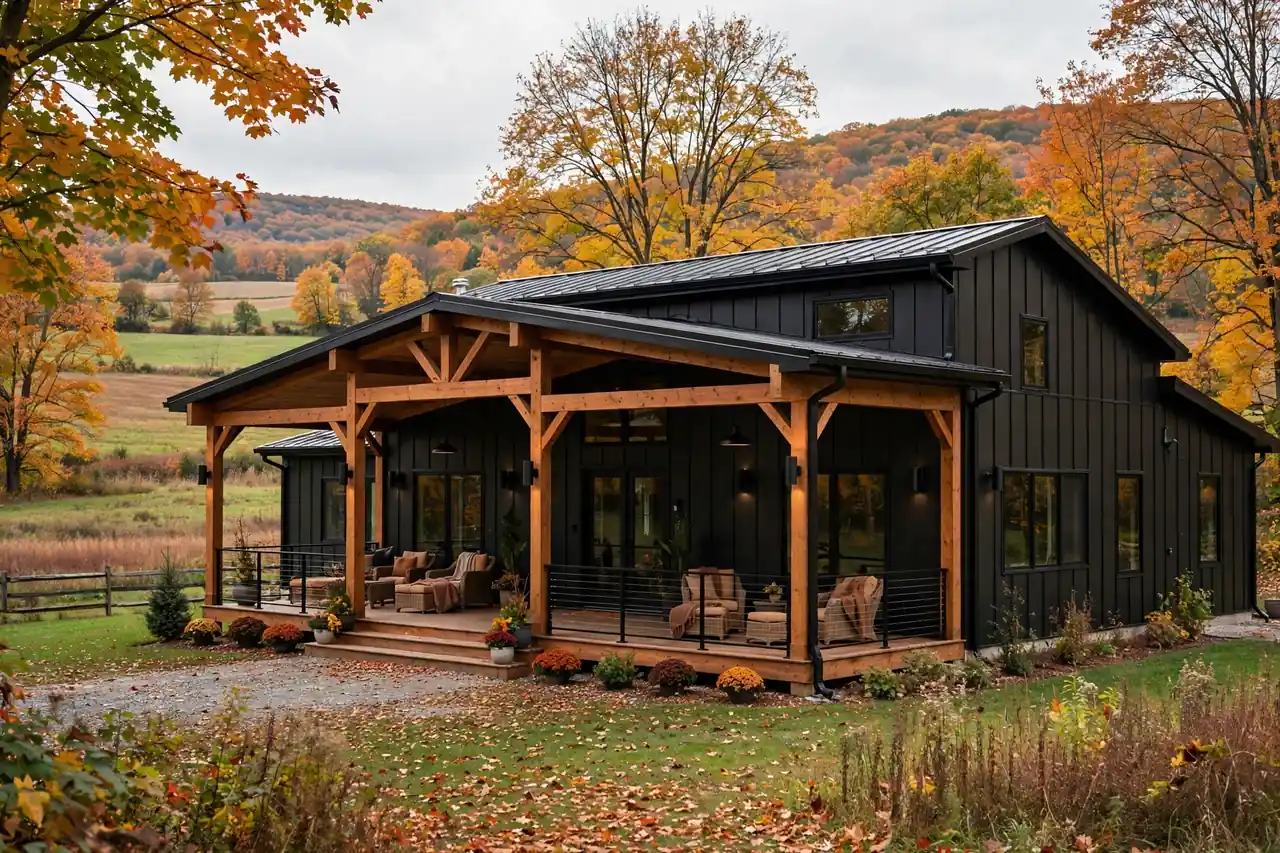
A shell-only barndominium can look dramatically cheaper than a finished residence because the shell represents only one portion of the complete project — and comparing a shell price with a finished-home price is the single most common mistake when budgeting a barndominium cost per sqft in Pennsylvania.
Shell-Only Cost
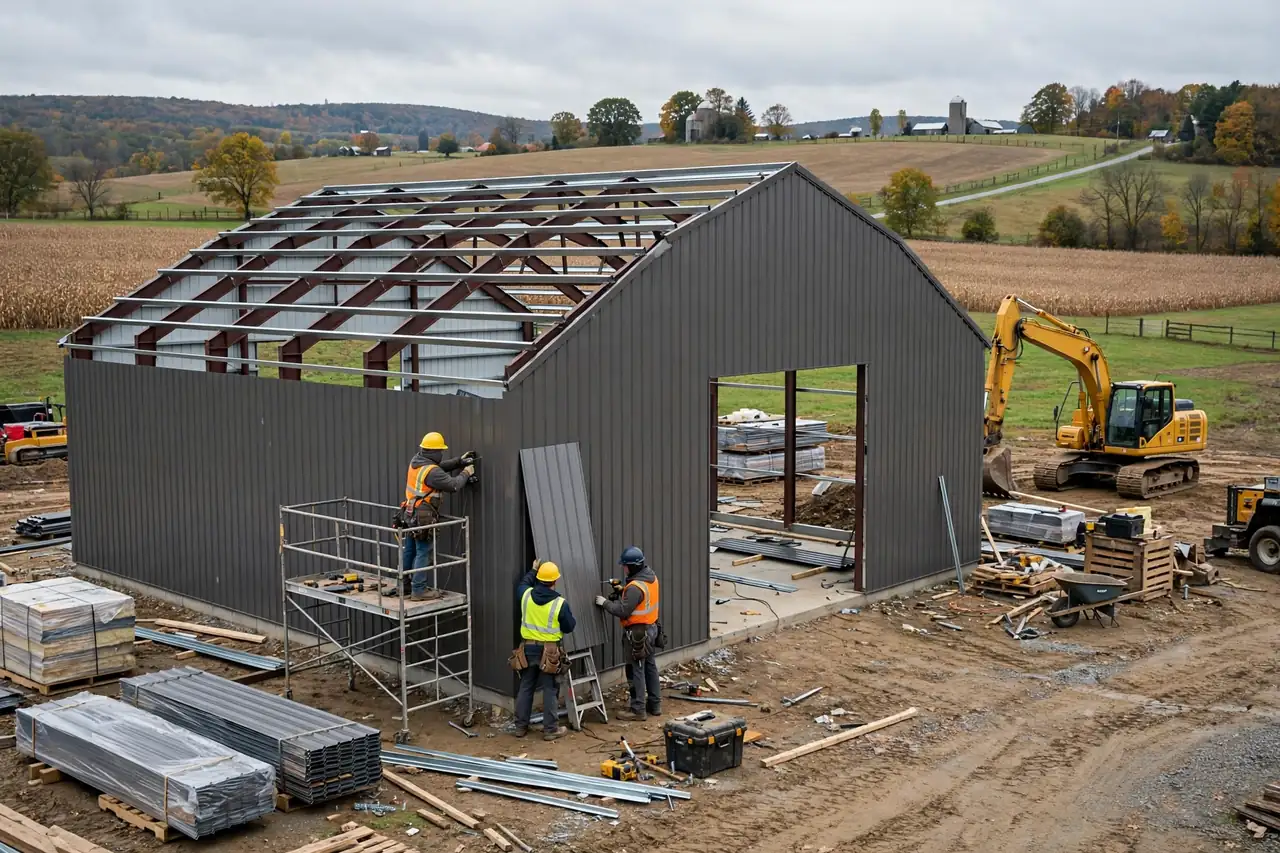
A shell can include the structural frame, roof, exterior metal siding and possibly openings for doors and windows. Depending on the package, it may or may not include the slab, insulation, windows, doors and other components. One Pennsylvania source estimates steel building shell packages for 2,000–2,500 square foot barndominiums at approximately $48,000–$107,500 — but that’s only one component of the total project, and a shell price should never be compared directly with the price of a turnkey home.
Kit Cost
A barndominium kit can simplify procurement of the structural components, but a kit does not automatically mean you’ve purchased a complete house. Depending on the manufacturer, a kit may include steel framing, roof panels, wall panels, trim, hardware, engineering documents and building plans — but you’ll likely still need to pay separately for site preparation, foundation, assembly, insulation, electrical, plumbing, HVAC, interior construction, windows and doors, kitchen and bathrooms, permits, and well and septic. When comparing kits, calculate the completed project cost, not simply the advertised kit price. Run a specific package through our Barndominium Kit Cost Calculator to see how the shell price compares with a fully finished budget.
Pennsylvania Barndominium Cost by Size
The size of your barndominium has a major effect on total construction cost, but cost per square foot doesn’t always decrease dramatically as the building gets larger — kitchens, bathrooms, mechanical systems and utility connections create fixed costs that can make smaller homes more expensive per square foot.
| Home Size | $100/sqft | $140/sqft | $180/sqft |
|---|---|---|---|
| 1,000 sqft | $100,000 | $140,000 | $180,000 |
| 1,500 sqft | $150,000 | $210,000 | $270,000 |
| 2,000 sqft | $200,000 | $280,000 | $360,000 |
| 2,500 sqft | $250,000 | $350,000 | $450,000 |
| 3,000 sqft | $300,000 | $420,000 | $540,000 |
For a reasonably finished 2,000 sqft Pennsylvania barndominium, a preliminary planning budget of approximately $220,000–$340,000 can be used for many basic-to-mid-range scenarios, while custom or premium projects can move substantially above that — up toward $360,000–$490,000+ at the $180–$245/sqft end. Remember this is not necessarily the complete amount needed to purchase land and finish the entire property; land, major grading, driveway construction, well, septic, utility connections, engineering and other site-specific costs sit outside a simple $/sqft calculation.
What’s Included in a Pennsylvania Barndominium Cost Per Sqft?
Before comparing prices from different builders, determine exactly what the quoted price includes. A finished-home price may include:
- Structural shell, roof system, exterior metal siding
- Foundation or slab, insulation, interior framing, drywall
- Electrical wiring, plumbing, heating and cooling
- Windows and exterior doors, interior doors
- Kitchen cabinets and countertops, bathrooms
- Flooring, interior paint, basic lighting
But many quotes exclude some combination of:
Always compare quotes using the same scope of work. Our Barndo Material Cost Estimator can help you see how individual material and finish choices move the total.
Pennsylvania Barndominium Cost by Region
Pennsylvania is geographically diverse, so a single statewide price should be treated as a starting point rather than a guaranteed local rate.
Philadelphia & Southeastern PA
Higher land and labor costs than many rural parts of the state. A custom barndominium with premium interior finishes can move toward the upper end of the statewide planning range. Investigate zoning compatibility early — a property that looks inexpensive may have restrictions tied to residential use, setbacks, agricultural preservation, or environmental constraints.
Pittsburgh & Western PA
A mixture of suburban, rural and mountainous terrain. Excavation, grading, driveway construction and site access become important cost variables on sloped or hard-to-reach properties. Rural properties outside the metro area may need additional driveway, well and septic work; properties closer to infrastructure may have easier utility access but higher land costs.
Central Pennsylvania
Many rural properties where the barndominium concept is attractive. Lower land prices don’t automatically mean lower construction costs — site work, utilities, well and septic requirements still need to be evaluated individually.
Northeastern PA
Includes colder areas where winter conditions and snow-related structural considerations affect design and construction. Foundation design, insulation and heating requirements should be evaluated during the planning stage.
Rural Pennsylvania
Rural land can look inexpensive compared with developed areas, but the infrastructure required to turn raw land into a buildable homesite — driveway, well, septic, utility extensions — can add tens of thousands of dollars to the project.
The right property depends less on the county name and more on the individual parcel’s zoning, road access, soil, slope, utilities and flood risk.
Pennsylvania Barndominium Codes, Permits and Zoning
Pennsylvania construction must comply with the state’s Uniform Construction Code (UCC), and a barndominium is not automatically exempt from it simply because it uses a post-frame or metal-building construction method. The UCC applies to the construction, alteration, repair, movement, removal, demolition, location, maintenance, occupancy and change of occupancy of covered buildings — and it defines residential buildings to include detached one-family and two-family dwellings.
Pennsylvania’s Department of Labor & Industry states that the UCC is the statewide building code and that more than 90% of Pennsylvania’s municipalities have elected to administer and enforce it locally, either through their own employees or certified third-party agencies — see the Pennsylvania Department of Labor & Industry’s UCC page for the official reference. For 2026, Pennsylvania’s triennial UCC update became effective on January 1, 2026, incorporating the 2021 International Codes with Pennsylvania amendments.
Zoning is a separate layer on top of the UCC, and it’s generally local — so the answer can change from one municipality to another. Agricultural zoning does not automatically mean that every type of residential construction, including a barndominium containing living space, is permitted. Before ordering a building kit or purchasing land, confirm with the local municipality or code enforcement authority:
- Zoning classification and whether residential use is allowed
- Building permit requirements
- Setbacks and driveway access
- Septic approval and well requirements
- Floodplain restrictions
- Accessory structures and occupancy requirements
Pennsylvania Barndominium Foundation Cost
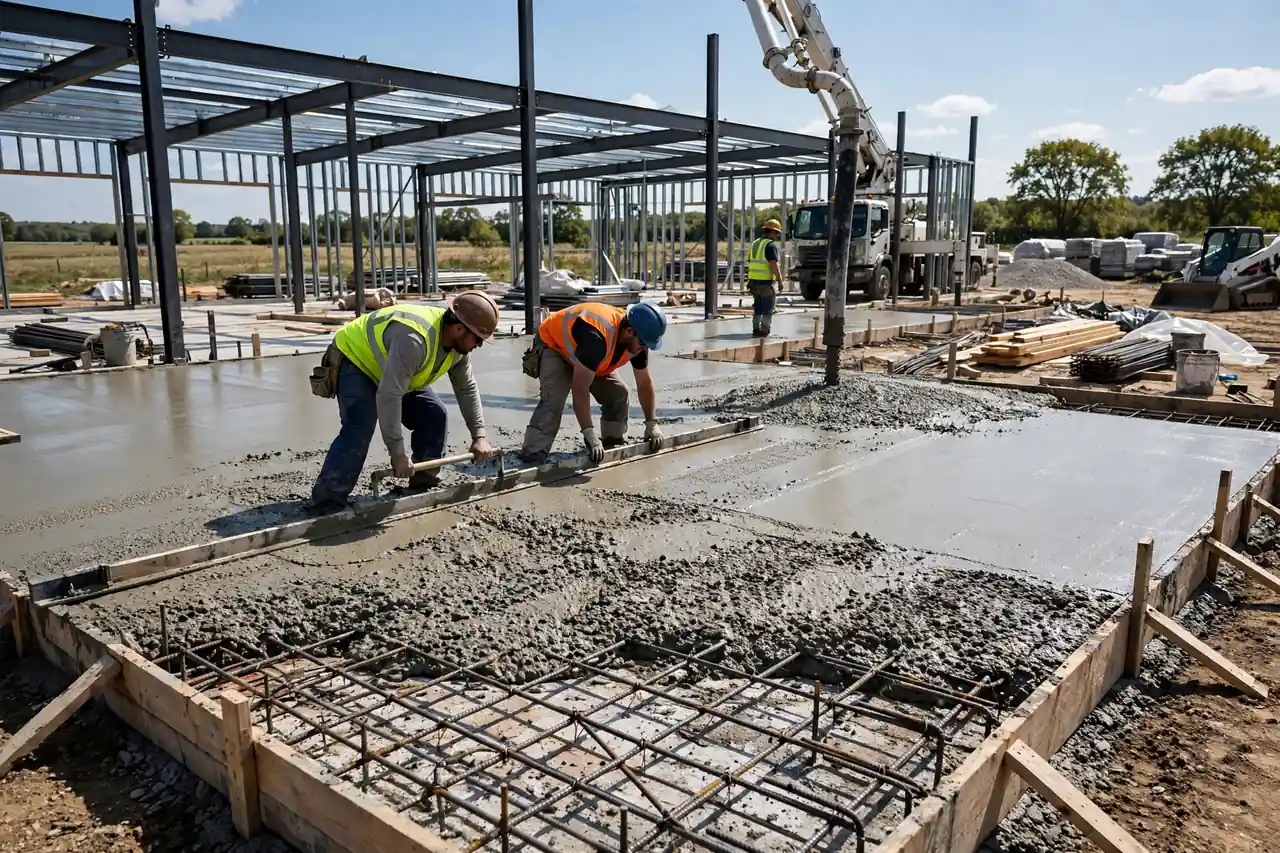
The foundation is another major cost component. Common options include concrete slab-on-grade, monolithic slab systems, stem-wall foundations, crawl spaces, and basements.
Basements can be particularly relevant in Pennsylvania because they may provide additional living or storage space while also serving as a foundation system. However, excavation, waterproofing, drainage and concrete work can significantly increase the project budget. The correct foundation should be determined from the building design, site conditions, soil characteristics and applicable code requirements rather than simply choosing the cheapest option.
How Do Snow Loads Affect Pennsylvania Barndominium Costs?
Snow is an important design consideration in Pennsylvania, particularly in colder and higher-elevation areas. Snow load requirements can affect roof design, structural steel sizing, roof pitch, trusses or rafters, connections, engineering, and roof drainage. A building designed for a specific Pennsylvania location should use the applicable design criteria for that site rather than relying on a generic barndominium kit specification.
Insulation and Heating for a Pennsylvania Barndominium
Insulation
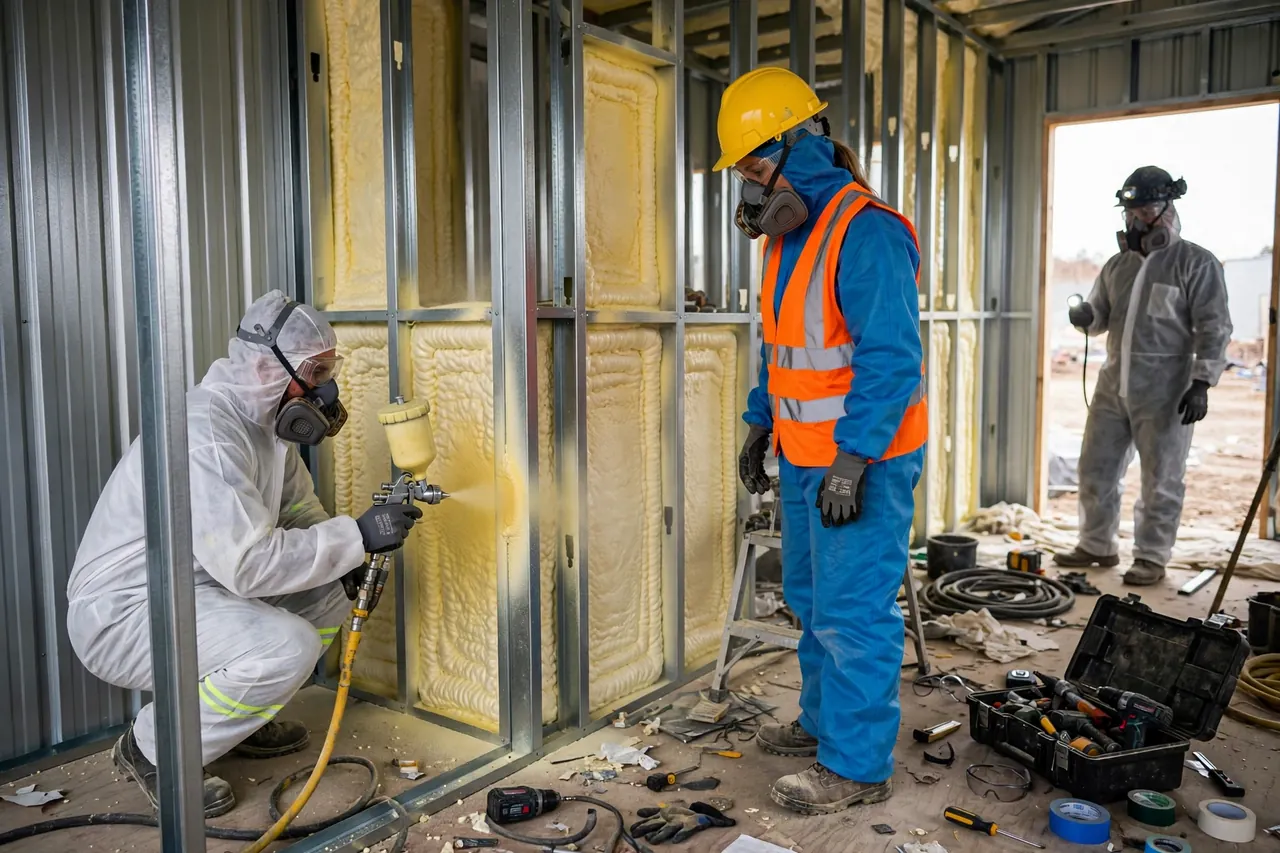
Insulation is particularly important for a Pennsylvania barndominium because the building must stay comfortable during cold winters while controlling heating costs. Common approaches include fiberglass batts, blown-in insulation, closed-cell and open-cell spray foam, and rigid foam systems — the best choice depends on the wall and roof assembly, climate, moisture control requirements, energy goals and budget. Trying to save money by under-insulating a metal building can be a false economy, since condensation control and thermal performance are important parts of a comfortable finished home.
Heating
Heating should be included in the budget from the beginning rather than treated as an afterthought. Potential systems include heat pumps, forced-air furnaces, propane systems, natural gas where available, electric heating, radiant floor heating, and wood or pellet systems. Radiant floor heating can be attractive in a concrete-slab barndominium, but it adds design and installation costs that should be included before construction begins.
Rural Pennsylvania Barndominium Cost: Well and Septic
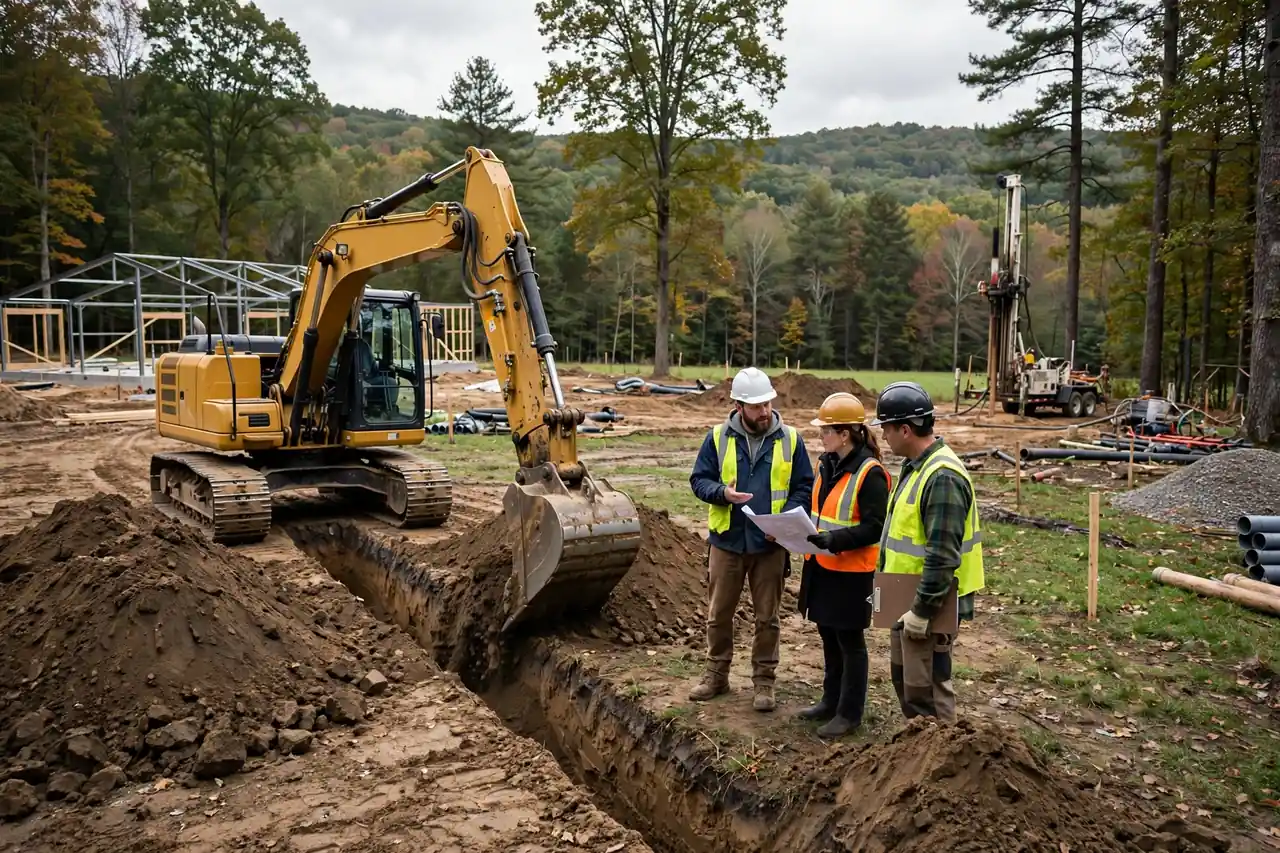
Many rural Pennsylvania properties don’t have access to public water and sewer systems. In those cases, the project may require both a private well and an on-lot sewage disposal system — and because both are handled with significant local involvement, the cost and feasibility of a rural property should be investigated before buying the land.
Well Cost
There’s no single statewide price that applies to every private well — costs vary based on drilling depth, geology, site accessibility, well yield, pump system, water treatment requirements, electrical work and testing. The Pennsylvania DEP’s private wells page provides information on water testing, contaminants, well construction and well-driller information. Before purchasing rural Pennsylvania land, investigate whether a suitable well is likely to be available and whether the property has any existing water infrastructure.
Septic Cost
Septic costs depend heavily on the soil, available area, site slope, system design and local requirements. Pennsylvania’s septic program is administered under the Sewage Facilities Act (Act 537) framework, with on-lot sewage facilities largely administered at the local level by municipalities, county health departments, or other local agencies with DEP oversight. A difficult site can require a more complex system and therefore a substantially larger budget than a straightforward property.
How Much Does a Pennsylvania Barndominium With a Shop Cost?
A shop or garage is one of the major advantages of a barndominium, but it can make simple residential cost-per-square-foot comparisons misleading. A building with 2,000 sqft of finished living space and another 1,500 sqft of workshop space is not equivalent to a 3,500 sqft fully finished house. The shop may require its own concrete slab, steel framing, large overhead doors, electrical service, lighting, heating, insulation and storage systems. When calculating the total budget, separate finished living space from shop/garage space.
Builders, Kits and Custom Builds in Pennsylvania
When comparing Pennsylvania barndominium builders, don’t compare only the advertised price. Ask each builder whether the quoted price is for a shell or finished home, whether the foundation, windows, doors, insulation, plumbing, electrical, HVAC, kitchen cabinets and appliances are included, and whether site preparation, driveway, well, septic, engineering and permits are included or owner-supplied. A lower initial quote can become more expensive if important components are excluded.
| Option | Potential Advantage | Potential Disadvantage |
|---|---|---|
| Kit | Standardized structural components | May exclude many finishing costs |
| Shell Package | Can simplify structural construction | Still requires substantial interior work |
| Custom Build | Greater design flexibility | Usually more design and construction complexity |
| Turnkey Build | More predictable overall scope | Higher upfront price |
Is a Barndominium Cheaper Than a Traditional House in Pennsylvania?
It’s tempting to assume a barndominium will always be cheaper than a conventional Pennsylvania house, but the comparison isn’t that simple. A barndominium can potentially reduce costs through an efficient structural design and large open spaces. However, once you add premium finishes, large windows, complex rooflines, extensive porches, a finished shop, high-end kitchens and complicated site work, the total price can rise quickly.
The most useful comparison is between two buildings with the same finished living area, foundation type, interior finish level, bathroom count, kitchen quality, HVAC system, garage/shop area and site conditions. Our Barndominium vs. House Cost Calculator lines the two up side by side using your own numbers.
Pennsylvania Barndominium Insurance
Insurance should be investigated before construction begins rather than after the building is completed. Tell insurers exactly how the building will be used, including whether it contains residential living space, a workshop, a garage, a home office, a commercial activity, or large equipment. Construction type, replacement cost, location, roof design, heating system and use of the building can all affect insurance underwriting.
Financing a Barndominium in Pennsylvania
Financing can be more complicated than financing a conventional house because the lender may need to evaluate the construction method, plans, contractor, appraisal and completed value. Before buying land, ask potential lenders whether they finance barndominium construction, metal-frame or post-frame residential homes, construction-to-permanent loans, and land-plus-construction financing. Do not assume a lender will finance a particular barndominium simply because it finances conventional homes.
Run your target budget through our Free Home Loan Calculator for a realistic estimated monthly payment before approaching a lender.
Popular Pennsylvania Barndominium Floor Plans
- 1,500–2,000 sqft ranch — a practical single-story layout with two or three bedrooms.
- 2,000–2,500 sqft home with shop — living space combined with an attached garage, workshop, or equipment bay.
- 2,500–3,000 sqft family barndominium — larger kitchen, three or four bedrooms, and storage.
- Barndominium with basement — uses the foundation itself for extra finished or storage space, a layout that fits Pennsylvania’s colder climate well.
- Barndominium with loft — adds flexible living, office, or guest space without expanding the footprint.
Browse popular barndominium floor plans or open concept floor plans for efficient layouts, then use our Room & Furniture Fit Visualizer to test furniture placement before finalizing the plan.
How to Lower Your Pennsylvania Barndominium Cost Per Sqft
- Choose a simple rectangular building footprint.
- Keep plumbing fixtures relatively close together.
- Avoid unnecessary roofline complexity.
- Use standard-size windows and doors where practical.
- Compare shell and kit suppliers before choosing a package.
- Get at least three itemized contractor bids.
- Separate living-space pricing from shop or garage pricing.
- Get site, well and septic estimates before finalizing your floor plan.
- Choose durable mid-range finishes instead of over-customizing every room.
- Confirm zoning and UCC requirements before buying land.
Pennsylvania Barndominium Cost: Example Budgets
At a hypothetical $100/sqft planning level.
At a hypothetical $140/sqft.
At a hypothetical $200/sqft.
These are simplified construction-cost examples, not complete land-development budgets. Site costs and other excluded items can increase the actual project budget substantially.
Frequently Asked Questions
Q.What is the average cost per square foot for a barndominium in Pennsylvania?
There’s no single official statewide average. For preliminary planning, approximately $100–$150 per square foot can be used for many basic-to-mid-range finished-home scenarios, while premium projects can exceed $180–$245 per square foot.
Q.How much does a 2,000 sq ft barndominium cost in Pennsylvania?
A rough planning range is approximately $200,000–$340,000 for many basic-to-mid-range scenarios, with premium projects potentially reaching $360,000–$490,000 or more depending on specifications and site costs.
Q.Are barndominiums allowed in Pennsylvania?
Residential barndominiums can be subject to Pennsylvania’s Uniform Construction Code and local zoning requirements. Confirm the proposed use with the municipality and applicable code enforcement authority before construction.
Q.Does Pennsylvania have a statewide building code?
Yes. Pennsylvania uses the Uniform Construction Code (UCC). The state’s 2026 update became effective January 1, 2026, incorporating the 2021 International Codes with Pennsylvania amendments.
Q.Can I build a barndominium on a farm in Pennsylvania?
It depends on the property’s zoning and proposed use. Agricultural zoning does not automatically mean a residential barndominium is permitted. Check with the local municipality before purchasing land.
Q.Is a barndominium cheaper than a traditional house in Pennsylvania?
It can be in some circumstances, but it’s not automatically cheaper. The result depends on building size, foundation, interior finishes, site work, utilities, shop area and design complexity.
Q.How much does a Pennsylvania barndominium shell cost?
Published estimates show a structural shell can be substantially less expensive than a finished home — one current estimate places a steel building kit shell for a 2,000–2,500 sqft project around $48,000–$107,500, before many finishing and site costs.
Q.Do Pennsylvania barndominiums need permits?
Covered residential construction is subject to the Pennsylvania Uniform Construction Code, with administration and enforcement often handled locally. Contact the municipality or code enforcement agency for property-specific permit requirements.
Q.Do rural Pennsylvania barndominiums need wells and septic systems?
If public water and sewer are unavailable, a private well and on-lot sewage disposal system may be necessary. Pennsylvania DEP provides resources for private wells and operates the statewide sewage facilities regulatory framework with significant local administration.
Q.What is the biggest mistake when estimating Pennsylvania barndominium costs?
Comparing a shell price with the price of a finished home. Always determine what’s included in the quote and separately budget for land, site preparation, foundation, utilities, well, septic, permits, engineering and interior finishes.
Pennsylvania Barndominium Cost Per Sqft: The Bottom Line
The cost of building a barndominium in Pennsylvania depends on far more than the steel frame. For early planning, a broad range of approximately $80–$245+ per square foot covers many of the scenarios you’ll encounter, but the useful number for your project depends on finish level and site conditions. A basic shell can look inexpensive when advertised per square foot — a completed residence is a different calculation because it includes insulation, foundation, electrical, plumbing, HVAC, kitchens, bathrooms and interior finishes. Rural Pennsylvania properties can also introduce major additional costs through excavation, driveways, wells, septic systems and utility installation.
Before you finalize a budget, determine:
- Home and shop/garage square footage, number of bedrooms and bathrooms
- Foundation type, roof design, and exterior finish
- Insulation system and heating/cooling system
- Window package and interior finish level
- Site conditions, well and septic requirements, utility availability
- Local zoning and UCC compliance for the specific parcel
Once these details are defined, obtain multiple itemized estimates rather than relying on a single advertised price per square foot. Pennsylvania’s UCC is statewide, but local municipalities and certified code enforcement agencies play a major role in administration and enforcement.
Ready to estimate your Pennsylvania project? Try our Barndominium Cost Calculator, then use the result as a starting point for obtaining itemized bids from Pennsylvania builders. You can also compare Pennsylvania with other states in our Barndominium Cost Per Sqft by State resource.