A 2026 Regional Cost Guide
South Dakota Barndominium
Cost Per Sqft (SD)
If you are searching for South Dakota barndominium cost per sqft, the first number you find online is not necessarily the number you should use. Current published estimates place turnkey construction at approximately $125–$190 per square foot, while shell-only estimates can run as low as $35–$60 per square foot. The bigger driver in South Dakota, though, is location — East River, central South Dakota, and the Black Hills / West River region each carry very different site-development realities.
South Dakota barndominium cost per square foot is not a single number — it moves with region, finish level, and site conditions more than in most states. Snow, wind exposure, foundation requirements, rural utilities, septic systems, well conditions, terrain, driveway construction and local building regulations can all affect the final cost of a South Dakota barndominium. This guide focuses specifically on South Dakota, commonly abbreviated SD and officially known as The Mount Rushmore State — a nickname used throughout South Dakota government and tourism materials.
The goal here is not a fake statewide “average.” Instead, this guide explains the current published cost ranges and the South Dakota-specific factors — snow load, wind, septic, well, agricultural-land tax rules, and the state’s 2% contractor’s excise tax — that can push a project toward the lower or higher end of the range. You can also compare South Dakota with other states using our Barndominium Cost Per Sqft by State guide, or see how a similar cold-climate market prices out in our Wisconsin barndominium cost guide.
South Dakota Barndominium Cost by Build Type
| Build Type | Planning Range | Typical Scope |
|---|---|---|
| Shell | $35–$60/sq ft | Basic structural/exterior building package; interior work usually extra |
| Basic Finished | $125–$145/sq ft | Functional finished residence with simpler selections |
| Mid-Range | $145–$170/sq ft | More complete residential finishes and systems |
| Premium / Custom | $170–$190+/sq ft | Higher-end finishes, complicated designs, or more expensive sites |
A difficult Black Hills site, extensive excavation, long utility runs, premium interior finishes, or unusually demanding structural requirements can push the total above these planning ranges. A shell quotation should never be compared directly with a turnkey residential quotation — see the section on shell-vs-finished pricing below. South Dakota barndominium cost per sqft moves the most at this shell-vs-finished boundary, so always confirm which stage of construction a quoted number represents.
East River vs West River: Why Location Matters More Than Size
This is one of the most important South Dakota-specific distinctions, and it matters more for a barndominium budget than almost anything else in this guide.
East River generally refers to the part of South Dakota east of the Missouri River. Much of this region consists of agricultural land and rolling or relatively open terrain. Areas around Sioux Falls, Brookings, Watertown, Aberdeen, Mitchell and Yankton have different development pressures and labor markets, but rural sites surrounding these communities can still require substantial utility and site work.
West River refers to the portion west of the Missouri River and includes the Black Hills and large areas of ranchland and prairie. The Black Hills contain more varied terrain, elevation changes and rocky conditions than the flat or gently rolling agricultural areas of eastern South Dakota. Communities such as Rapid City, Spearfish, Sturgis, Deadwood and Lead can have very different site conditions from one another, and a relatively inexpensive parcel in the Black Hills is not necessarily an inexpensive building site.
Black Hills Cost Drivers
Potential cost drivers for a Black Hills site include steep terrain, rock excavation, long or difficult driveways, utility access, site grading, foundation design, snow exposure, elevation and drainage. A hillside property may require excavation, retaining structures, longer driveway work, additional drainage, more complicated foundation work, and longer utility runs — which is why a Rapid City-area barndominium should be priced from the actual site rather than from a statewide average.
East River Considerations
Eastern South Dakota can offer relatively open agricultural sites where the major questions often involve utilities, soil, drainage, septic, road access and local zoning. Pierre and central South Dakota have extensive open areas with fewer natural windbreaks in many locations, which can influence driveway design, snow management, and building orientation. The Aberdeen region in particular is known for low winter temperatures and high winds that can move and accumulate snow, which deserves particular attention in the building envelope, heating system and roof design.
Shell Cost vs Finished Barndominium Cost
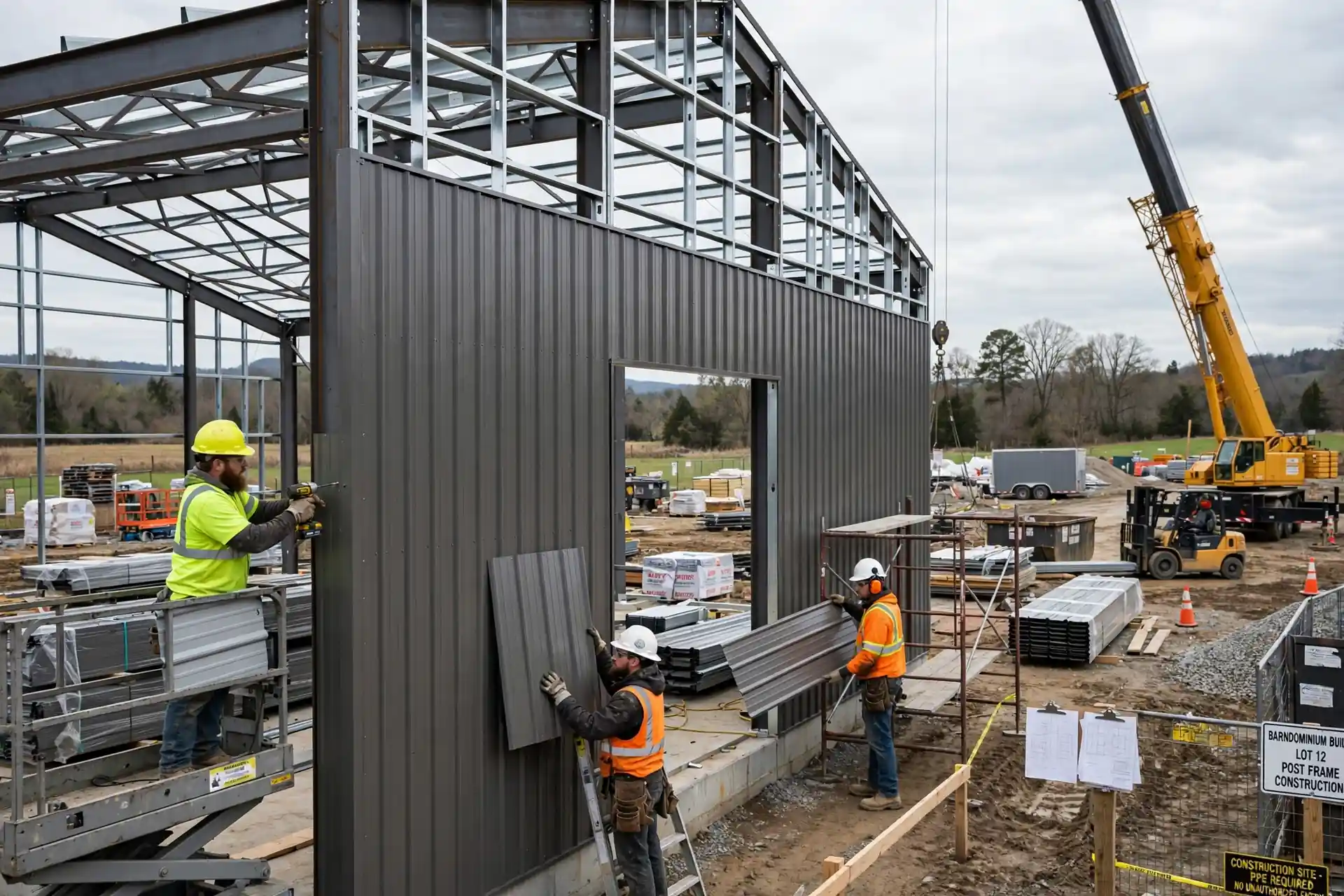
One of the most important things to understand before requesting quotes is the difference between a shell and a finished barndominium. Current published South Dakota estimates put shell construction around $35–$60 per square foot in some market datasets, while turnkey construction is considerably higher.
A shell may include some combination of structural framing, roof system, exterior metal panels, basic openings, and some structural components. It typically does not include insulation, drywall, electrical, plumbing, HVAC, kitchen, bathrooms, flooring, interior doors, lighting, appliances, or finished ceilings.
South Dakota Barndominium Cost by Square Footage
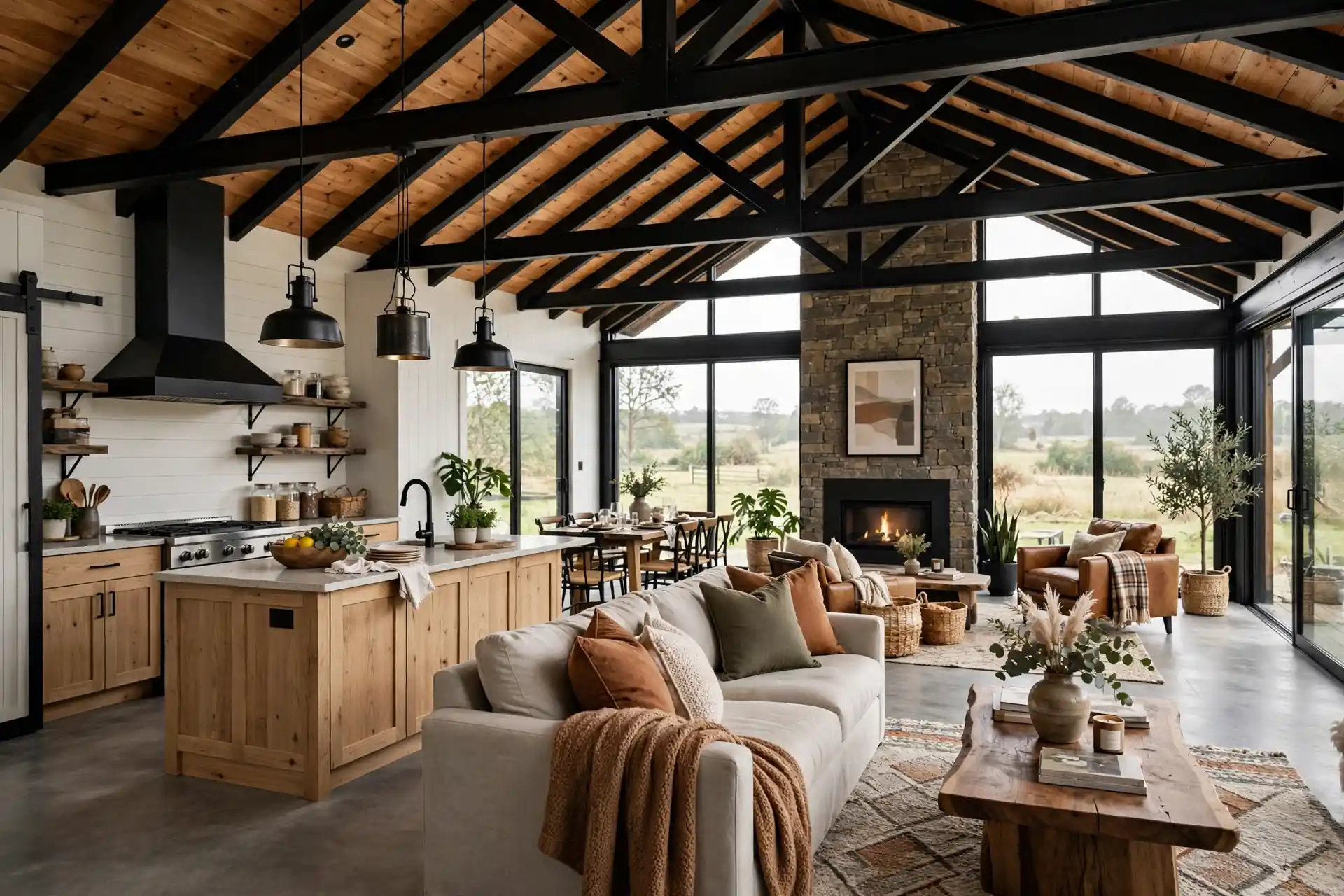
The finished square footage is only one part of the calculation — foundation, structural framing, roof system, insulation, windows, HVAC, plumbing, electrical, interior finishes, site preparation, driveway, water supply, septic, permits and engineering all factor in. The table below uses this guide’s planning ranges rather than a live construction-price database; land and many site-development expenses are separate.
| Finished Area | $125–$145/sq ft | $145–$170/sq ft | $170–$190+/sq ft |
|---|---|---|---|
| 1,200 sq ft | $150,000–$174,000 | $174,000–$204,000 | $204,000–$228,000+ |
| 1,500 sq ft | $187,500–$217,500 | $217,500–$255,000 | $255,000–$285,000+ |
| 1,800 sq ft | $225,000–$261,000 | $261,000–$306,000 | $306,000–$342,000+ |
| 2,000 sq ft | $250,000–$290,000 | $290,000–$340,000 | $340,000–$380,000+ |
| 2,500 sq ft | $312,500–$362,500 | $362,500–$425,000 | $425,000–$475,000+ |
| 3,000 sq ft | $375,000–$435,000 | $435,000–$510,000 | $510,000–$570,000+ |
Smaller buildings do not always cost less per square foot — kitchens, bathrooms, HVAC equipment and utility connections create fixed costs that are spread over fewer square feet in a smaller home. For a personalized number, run your specs through our Barndominium Cost Calculator.
Three South Dakota Barndominium Budget Examples
These are planning scenarios, not contractor bids — but they show how region, size, and finish level combine in practice.
A 3,000-square-foot building containing 1,800 square feet of finished living space and 1,200 square feet of unfinished shop space is a financially different project from a 3,000-square-foot fully finished house — separate your budget into finished living area, finished garage, unfinished shop, equipment storage, porches, and covered parking to make builder quotes easier to compare. Browse popular barndominium floor plans for layout ideas that split living space from shop space this way.
Snow Load, Wind & Foundation Requirements
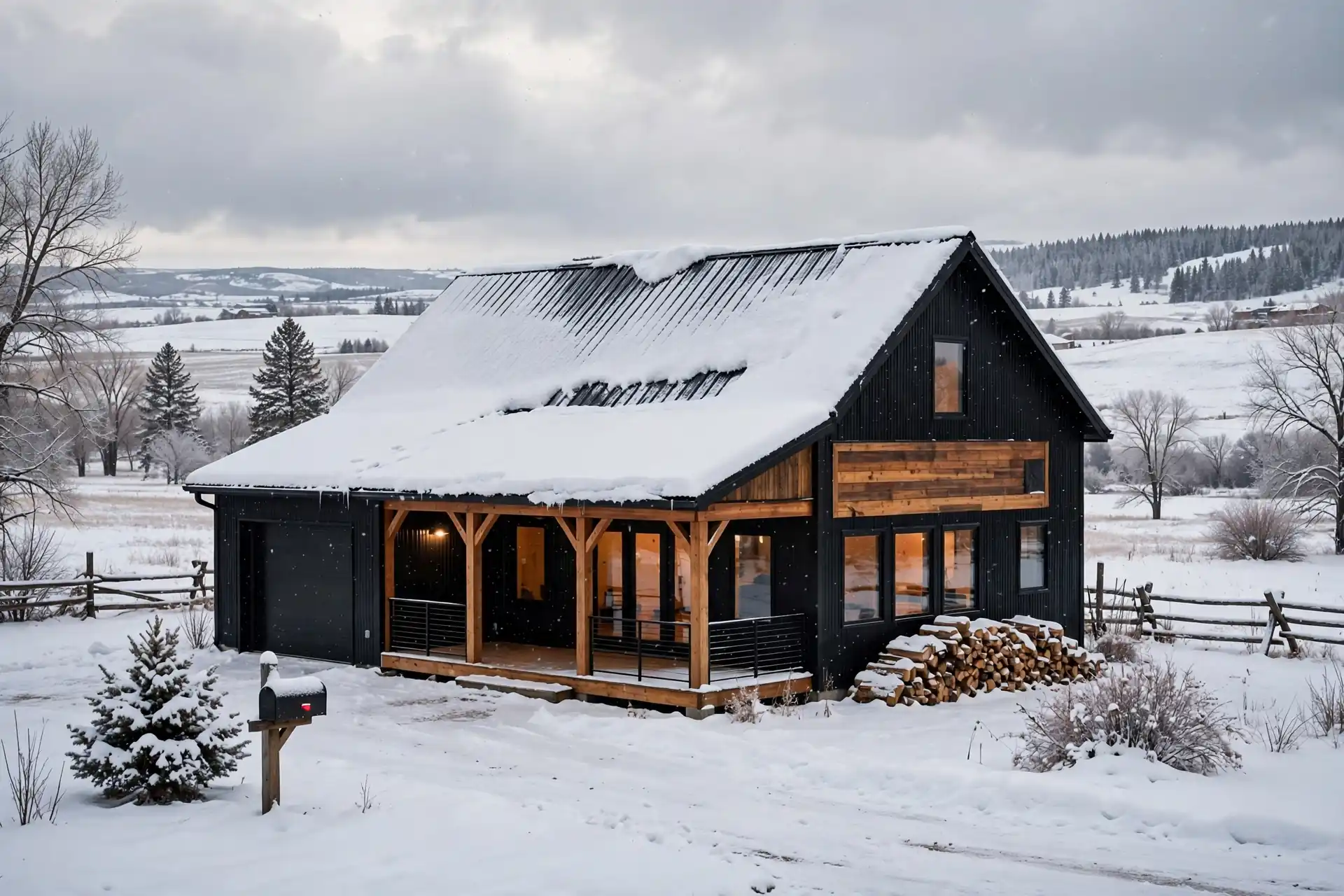
Snow is one of the major structural issues that separates a South Dakota barndominium from a building designed for a warmer climate. South Dakota’s winter conditions vary across the state: the Black Hills generally receive more snow, while open plains in eastern parts of the state can experience significant high winds and blowing snow. The roof must be designed for the loads applicable to the actual site rather than a generic metal-building package.
When getting a quote, ask: What ground snow load is being used? What roof snow load applies? Has the building been engineered for the site? Are the roof purlins and frame connections sized for the required loads? Is the snow-load design included in the quoted price? Do not assume a kit advertised for “South Dakota” automatically meets the exact requirements of every county and site.
Wind Exposure
Open prairie can expose buildings to strong winds, and blowing snow can create additional winter problems. The structural system needs a continuous load path from the roof through the walls and into the foundation — roof-to-frame connections, frame-to-foundation anchorage, wall bracing, metal-panel fastening, and large overhead-door openings all matter. Large shop doors can be particularly important because they create large openings in the building envelope.
Foundation and Frost
South Dakota has genuine freeze-thaw conditions, and foundation design needs to account for the local climate, soil conditions and applicable code requirements. A slab design that works well in a warm Southern climate should not simply be copied into South Dakota. Depending on the site and design, your builder or engineer may need to address footing depth, frost protection, insulation, drainage, soil bearing capacity, and water management.
Insulation and Heating
A metal shell by itself is not an efficient home. The building envelope needs to control heat loss during cold weather while managing air leakage and moisture — wall and roof insulation, air sealing, windows, exterior and garage doors, the heating system, ventilation, and thermal bridges all factor in. A large shop area can make heating calculations even more important because it may have large overhead doors and a much larger air volume than the finished living area. See our guide on whether spray foam insulation is mandatory for a barndo for more on insulation trade-offs in a cold climate. Radiant floor heating can be attractive since concrete slabs are common in barndominium designs, but compare installed cost, equipment, controls, and expected performance against other systems before choosing.
Does South Dakota Have a Statewide Building Code?
South Dakota’s building-code system is different from states with one comprehensive code administered identically in every county. Under 2026 Senate Bill 129, South Dakota updated state statutes to reference the 2024 editions of the International Residential Code and International Building Code, effective July 1, 2026. Municipalities and counties adopt and enforce residential construction requirements locally, with authority for local amendments subject to the limits in state law.
This means a person planning a barndominium should identify the actual jurisdiction controlling the property before assuming which code provisions, permits and inspections apply — especially for rural property. Before buying land, contact the applicable city building department, county planning department, county zoning office, or local building official, and ask specifically about a detached one-family residential structure that combines living space with a garage or shop.
South Dakota Septic & Well Requirements
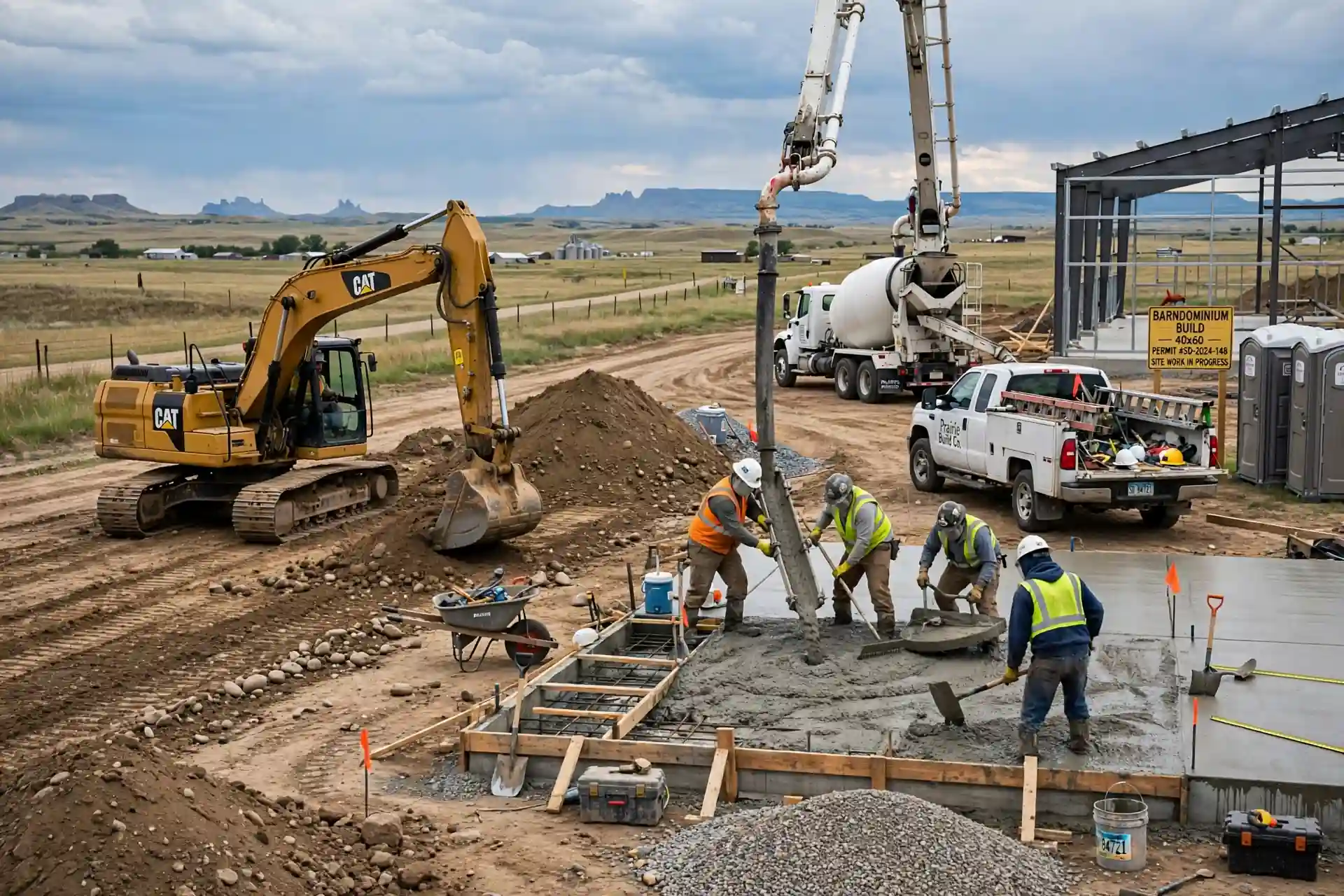
Rural South Dakota properties frequently require onsite wastewater treatment systems. South Dakota’s Department of Agriculture and Natural Resources (DANR) states that approximately 25% of South Dakota residents rely on onsite wastewater systems. State regulations, found in the Administrative Rules of South Dakota, Chapter 74:53:01, establish minimum standards, while local governments can impose more stringent requirements.
A property that looks perfect for a barndominium still needs to be evaluated for soil conditions, lot size, groundwater conditions, slope, percolation characteristics, distance from wells, available drainfield area, and expected wastewater flow. South Dakota’s onsite wastewater rules specifically require the system designer to consider these factors.
Septic Tank Sizing
South Dakota administrative rule 74:53:01:25 specifies minimum septic-tank capacities. For systems receiving wastewater flows of 750 gallons per day or less, the minimum liquid capacity is generally 1,000 gallons. Additional capacity is required when a garbage disposal is used (an increase of 20%), and systems serving higher flows scale up from there. This is one reason the number of bedrooms and expected wastewater flow should be established early in the design process.
Well Requirements
If your property does not have access to a public water system, you may need a private water well or another approved water supply. South Dakota’s DANR regulates water wells through its Water Rights Program and maintains well-construction standards; water-well drilling work must be performed by an appropriately licensed South Dakota well driller. DANR also maintains a database of well-completion reports, which can provide useful background when researching nearby wells and groundwater conditions before purchasing land.
Design Well and Septic Together
A common rural-building mistake is selecting the house location first and then trying to fit the well and septic system around it. Plan the entire site together — you need room for the house, well, septic tank, drainfield, driveway, a future replacement drainfield area where required, accessory buildings, and property setbacks. The septic designer is required to consider distance from producing water wells and other site characteristics, so these decisions should not be treated as unrelated.
South Dakota Construction Taxes & Agricultural Land Rules
Contractor’s Excise Tax
South Dakota imposes a construction-specific 2% contractor’s excise tax. The South Dakota Department of Revenue states that any person entering into a contract for construction services, or engaging in the construction, building, installation, or repair of a fixture to real property, must hold a South Dakota contractor’s excise tax license, and the tax is imposed on gross receipts from construction services and realty improvement projects. This is particularly important when comparing builder quotes — ask whether the excise tax is included or shown separately, how owner-furnished materials are treated, and whether applicable municipal taxes are included.
Agricultural Land and Property Tax
Buying acreage does not automatically mean the barndominium itself receives agricultural tax treatment. South Dakota law classifies property into agricultural property, nonagricultural property, and owner-occupied single-family dwellings — and specifically excludes a normally occupied dwelling or attached garage from the agricultural-property category, even when the surrounding land qualifies as agricultural land.
To be classified as agricultural land for tax purposes, South Dakota law generally requires the land to be part of a contiguous ownership of at least 80 acres devoted principally to agricultural use (with some income-based alternatives), and county commissions have the authority to increase that minimum acreage requirement up to 160 acres. If you’re buying acreage and planning to build a residence with a large shop, discuss the expected classification with the county Director of Equalization rather than assuming the entire property will be taxed as agricultural land.
Can You Finance a Barndominium in South Dakota?
Financing a barndominium can be more complicated than financing an existing conventional house because the lender may need to evaluate the plans, builder, construction budget, appraisal and draw schedule. For a rural South Dakota property, lenders may also want documentation about the land, utilities and completed value. Do not assume a lender will treat a steel-frame or post-frame residence exactly the same way as a conventional stick-built home.
Before signing a construction contract, ask the lender whether the planned barndominium qualifies for the loan product you intend to use. Run the numbers through our Free Home Loan Calculator to get a realistic estimated monthly payment before committing to a loan amount, and compare the total project cost against a conventional build with our Barndominium vs House Cost Calculator or the New Home Construction Cost Calculator. Our broader Barndominium vs House comparison covers resale value and long-term cost considerations beyond the build itself.
What Should a South Dakota Builder Quote Include?
A useful quote should clearly identify whether the price includes engineering, foundation, concrete slab, structural frame, roof, exterior siding, windows, exterior doors, insulation, drywall, electrical, plumbing, HVAC, kitchen, bathrooms, flooring, interior painting, shop space, garage doors, site work, septic, well, driveway, permit fees, and applicable taxes. Two builders can quote the same “$150 per square foot” and be offering completely different projects.
Questions to Ask Every Builder
- How many barndominiums have you completed in South Dakota, and in my county?
- Who provides the structural engineering, and what snow-load and wind-exposure design is being used?
- Is the foundation, insulation, and heating system included?
- Is the shop finished or unfinished?
- Are septic, well, site grading, and driveway included?
- Are permits, contractor’s excise tax, and municipal taxes included?
- What happens if material prices change, and what is the estimated construction schedule?
- Can I inspect recently completed projects?
Land-Buying Checklist for a South Dakota Barndominium
Before purchasing land, investigate: county and jurisdiction, zoning, building-code and permit requirements, road and driveway access, electricity and internet availability, public water or private well feasibility, public sewer or septic feasibility, soil conditions, floodplain status, drainage, terrain, snow and wind exposure, survey requirements, and property-tax classification. For Black Hills property, add rock excavation, slope, elevation changes, driveway grade, retaining-wall requirements, and utility distance.
South Dakota vs Texas, North Dakota & Minnesota Barndominiums
The biggest difference between a South Dakota barndominium and a Texas barndominium is climate and site design. Texas projects may deal with heat, humidity, severe storms and regional wind requirements, but South Dakota introduces long periods of cold weather, snow, freezing conditions and winter wind exposure — insulation, air sealing, heating, foundation protection, snow loads, wind loads and winter access all need serious attention. A design copied directly from a Texas barndominium should be reviewed and adapted, not used unchanged.
South Dakota shares cold-weather construction issues with North Dakota and Minnesota, but terrain and development patterns differ. Eastern South Dakota shares agricultural characteristics with parts of Minnesota and Iowa, while western South Dakota introduces the Black Hills and higher-elevation terrain. South Dakota also has a distinct local-code structure in which municipal and county adoption of residential code standards matters significantly — for a property near the borders, compare actual local requirements rather than assuming neighboring states use identical rules.
Local Resources
These official sources can help you research a South Dakota property before finalizing your design or construction budget:
South Dakota Senate Bill 129 (2026)Updates state statute references to the 2024 International Residential Code and International Building Code, effective July 1, 2026. SD DANR — On-Site Wastewater (Septic) SystemsSeptic tank installation requirements and a link to Administrative Rules Chapter 74:53:01. SD DANR — Water Rights: WellsWell drilling, permitting, and licensed well-driller information for rural properties. SD Department of Revenue — Contractor’s Excise TaxDetails on the state’s 2% contractor’s excise tax and licensing requirements.Frequently Asked Questions
How much does a barndominium cost per square foot in South Dakota?
South Dakota barndominium cost per sqft currently runs around $125–$190 for a turnkey build in published 2026 estimates, although actual bids can fall outside that range. Shell-only pricing can be much lower because it excludes much of the residential finish work.
How much does a 2,000 sq ft barndominium cost in South Dakota?
A rough 2026 planning calculation is approximately $250,000–$380,000+ for the building based on $125–$190+ per square foot. Land, well, septic, site work and other project-specific costs can be additional.
Are barndominiums cheaper to build in South Dakota?
They can be, particularly when a simple structure combines finished living space with an unfinished shop or garage. However, snow, wind, heating, foundation, utilities and rural site-development costs can reduce or eliminate the expected savings.
Do South Dakota barndominiums need to meet the IRC?
South Dakota Senate Bill 129 (2026) updates state statutes to reference the 2024 editions of the International Residential Code and International Building Code, effective July 1, 2026. Municipalities and counties adopt and enforce residential construction requirements locally, so the actual governing jurisdiction should be checked before construction.
Do I need a permit to build a barndominium in South Dakota?
Permit requirements depend on the governing jurisdiction. Before construction, contact the applicable city, county or local building authority and ask specifically about a detached one- or two-family residential structure with a garage or shop.
Does South Dakota require septic for rural barndominiums?
If public sewer is unavailable, an onsite wastewater system is generally required. South Dakota regulates onsite wastewater systems through the Administrative Rules of South Dakota, Chapter 74:53:01, while local governments may impose more stringent requirements.
How much does septic cost for a South Dakota barndominium?
There is no reliable statewide flat price. Cost depends on soil, slope, groundwater, system type, lot size, wastewater flow, engineering and local requirements.
Can I build a barndominium on agricultural land in South Dakota?
Potentially, but agricultural tax classification is not the same thing as residential building permission. State law also excludes a normally occupied dwelling from the agricultural-property tax category even when the surrounding land qualifies as agricultural. Verify zoning, residential use, permits and tax classification with the appropriate local authorities.
Are Black Hills barndominiums more expensive?
They can be when the site involves steep terrain, rock excavation, long driveways, difficult utility access or complex foundation work. The building itself is not necessarily more expensive simply because it is in the Black Hills; the site conditions are what can change the budget.
What is the cheapest way to build a barndominium in South Dakota?
Start with a buildable property rather than simply the cheapest land. A simple building footprint, concentrated plumbing, efficient finished living space, an appropriately sized shop and early site testing can help control the overall budget.
What is South Dakota’s nickname?
South Dakota is officially known as The Mount Rushmore State. The nickname refers to Mount Rushmore in the Black Hills and is used in official South Dakota government materials.
What should I check before buying land for a South Dakota barndominium?
Check jurisdiction, zoning, building requirements, flood risk, soil, septic feasibility, water supply, utility access, road access, terrain, snow and wind exposure, and property-tax classification before purchasing the property.
South Dakota Barndominium Cost: Final 2026 Planning Range
For 2026, a practical published-market planning range for South Dakota barndominium cost per sqft is approximately $125–$190 for a finished build, while shell-only figures can be much lower. That means a 2,000-square-foot finished building could have a preliminary construction range of approximately $250,000–$380,000+ before considering separate land-development expenses.
But South Dakota is a state where the location of the property can matter almost as much as the size of the building. A simple East River acreage site may have a very different cost profile from a steep Black Hills property. A rural parcel with easy utility access can be very different from one requiring a long driveway, private well, engineered septic system and extensive excavation.
The most useful way to budget a South Dakota barndominium is therefore: building cost + foundation + site work + utilities + well + septic + driveway + permits + taxes + interior finish + contingency. Do not buy the cheapest-looking land and assume you have found the cheapest building project — evaluate the entire buildable site before committing to the land, then run your numbers through our Barndominium Cost Calculator and get at least three detailed quotes from South Dakota contractors who build in your specific county.