
If you‘re building a barndominium in 2026, you’ve probably heard the phrase “spray foam insulation” more times than you can count. There‘s a reason for that. In a metal building, spray foam isn’t just a suggestion – it‘s a necessity.
Here’s why.
Table of Contents
The Problem with Metal Buildings
Steel and post-frame barndominiums share one weakness: metal conducts heat and cold like a highway. Without proper insulation, your beautiful barndo becomes an oven in July and an icebox in December.
But temperature isn’t the only issue.
- Condensation (Sweating): When warm, humid air hits a cold metal surface, water droplets form. Over time, this leads to rust, mold, and rotting wood.
- Rain Noise: A metal roof without insulation sounds like a drum corps during a storm.
- Air Leaks: Fiberglass batts leave gaps. Air moves freely, carrying heat, cold, and moisture with it.
Planning to build with a kit? Learn more in our guide to the best barndominium kits for 2026.
Why Closed-Cell Spray Foam insulation is the Gold Standard
Not all insulation works in a barndominium. Fiberglass batts? They sag, leave voids, and absorb moisture like a sponge. Rigid foam boards? Better, but they still leave seams where air sneaks through.
Closed-cell spray foam insulation solves everything at once.
| Feature | Benefit |
|---|---|
| Expands to seal every crack | Zero air leaks – your HVAC works less |
| R-value of 6-7 per inch | Superior thermal performance with thinner walls |
| Acts as a vapor barrier | No condensation = no rust or mold |
| Adds structural strength | Foam bonds to metal, reducing flex |
| Dampens sound | Rain noise drops by 70-80% |
Real-World Results
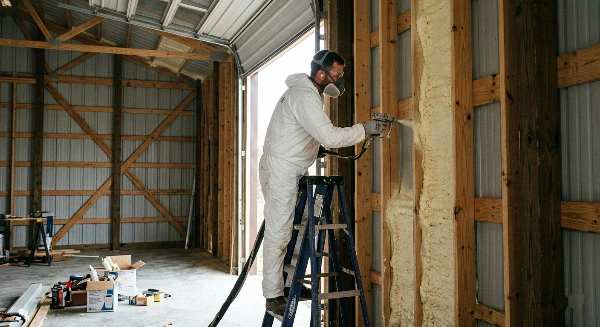
Barndominium owners who use closed-cell spray foam insulation report:
- 30-40% lower energy bills compared to fiberglass
- No more “drumming” during rainstorms
- Comfortable temperatures even in Texas summers or Wisconsin winters
- No musty smells (a sign of hidden moisture)
How Much Does It Cost?
spray foam insulation is more expensive upfront – typically 1.50to3.00 per board foot (1 inch thick). For a 2,000 sq. ft. barndominium, expect 5,000to10,000 for walls and roof.
But here‘s the kicker: it pays for itself in 3-5 years through energy savings alone. And you never have to replace it. Fiberglass needs refreshing after 15-20 years. Spray foam lasts the life of the building.
Open-Cell vs. Closed-Cell – Know the Difference
| Type | R-value | Vapor Barrier | Best For |
|---|---|---|---|
| Open-cell | R-3.5 per inch | No | Interior walls, soundproofing between rooms |
| Closed-cell | R-6 to R-7 per inch | Yes | Metal roofs, exterior walls, anywhere moisture is a risk |
For barndominiums, always choose closed-cell on the roof and exterior walls. Use open-cell only for interior partition walls (to save money).
The Chemistry & Your Health: A Balanced Look at spray foam insulation Safety
It’s only fair to understand exactly what this material is and how it affects the people who live with it—and the professionals who install it.
What’s Actually in the Spray?
This isn’t magic foam; it’s a precise two-part chemical system:
- The “A-Side” (Isocyanate): This is the primary driver of health and safety discussions. It usually contains MDI (methylene diphenyl diisocyanate), a potent respiratory sensitizer and irritant. In Australia, some isocyanates, including MDI, are even classified as suspected of causing cancer.
- The “B-Side” (Polyol Resin): This side contains a mix of catalysts, blowing agents, flame retardants, and surfactants. When mixed in a 1:1 ratio, these two sides kick off an exothermic reaction, expanding into the rigid foam we know.
The Installation Period: The Phase of Highest Risk
During application and the first 24-72 hours of curing, the main concern is off-gassing—the release of volatile organic compounds (VOCs) and unreacted chemicals. For this reason, the EPA strongly advises that buildings be vacated during installation and for a safe re-entry period afterward.
The two main risks to be aware of during this window are:
- Short-Term Exposure: Exposure can cause immediate irritation to the eyes, skin, and throat, as well as coughing, wheezing, and shortness of breath. Some people may also experience headaches and dizziness.
- Sensitization (Long-Term Risk): The most serious, permanent risk from exposure to isocyanates is sensitization. This is essentially the development of a chemical allergy. Once a person is sensitized, even extremely low levels of future exposure can trigger severe asthma attacks, which can be a life-long condition. This is why the EPA and OSHA mandate that professional installers wear supplied-air respirators.
After the Cure: Is the Home Safe for Occupants?
Yes. Once the reaction is complete and the foam has fully hardened, it becomes a chemically inert and stable material. Properly installed spray foam insulation at that stage poses no danger to occupant health and is considered safe for residential use. If you or the installers notice persistent chemical odors weeks after the project, this is a red flag that the foam was improperly mixed or applied, and it should be inspected by a professional.
How the Industry Has Evolved for Safety
The horror stories you might find online are overwhelmingly from before 2010. The industry is vastly different now:
- Mandatory Pro Training: Reputable manufacturers will not sell their chemicals to uncertified contractors.
- Better Chemistry: Modern formulations are designed to be more reliable and cure more completely.
- Strict Installation Protocols: Certified pros follow rigid checklists for mixing, temperature, and safety gear to ensure a safe, permanent result.
Ready to plan your budget? Try our interactive Barndominium Cost Calculator — free, no email required, and updated for 2026.