
Nevada · 2026 Cost Guide
Nevada Barndominium Cost Per Sq Ft (2026)
Heat, water, building codes and rural land: what actually moves the budget in the Silver State, from Las Vegas and Pahrump to Reno, Elko and remote acreage.
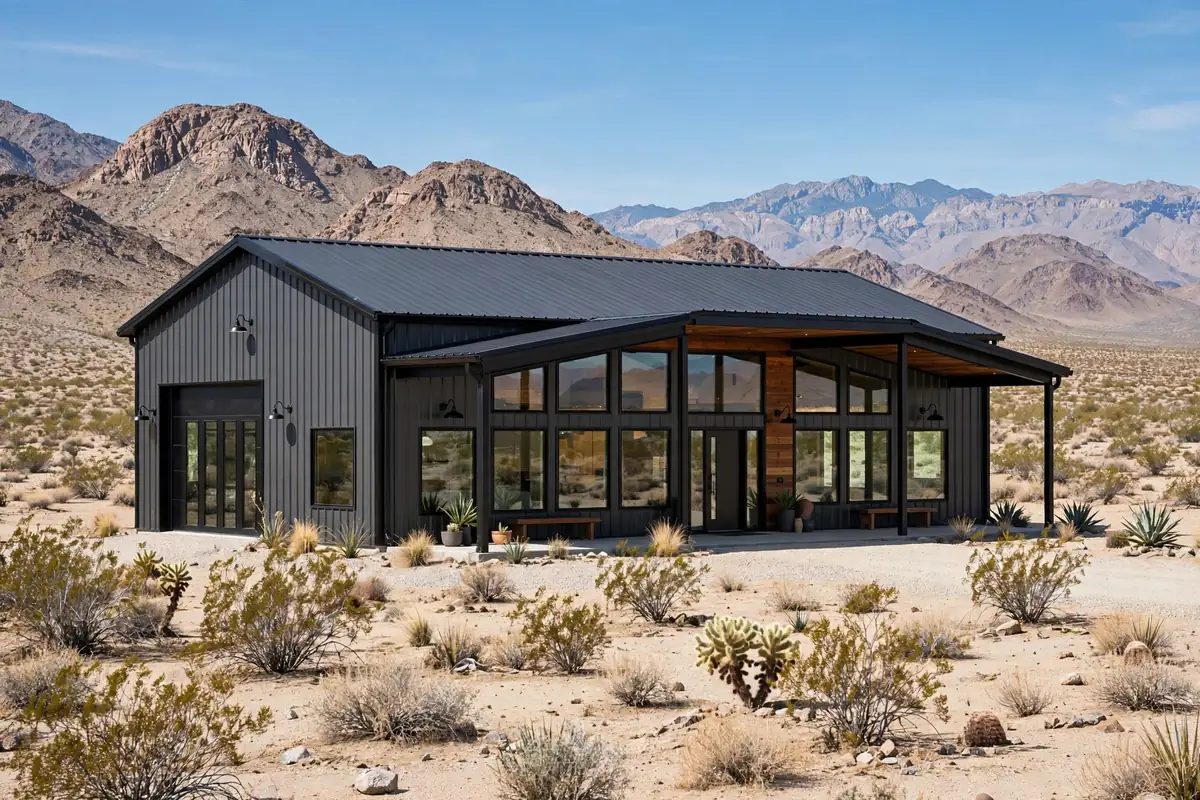
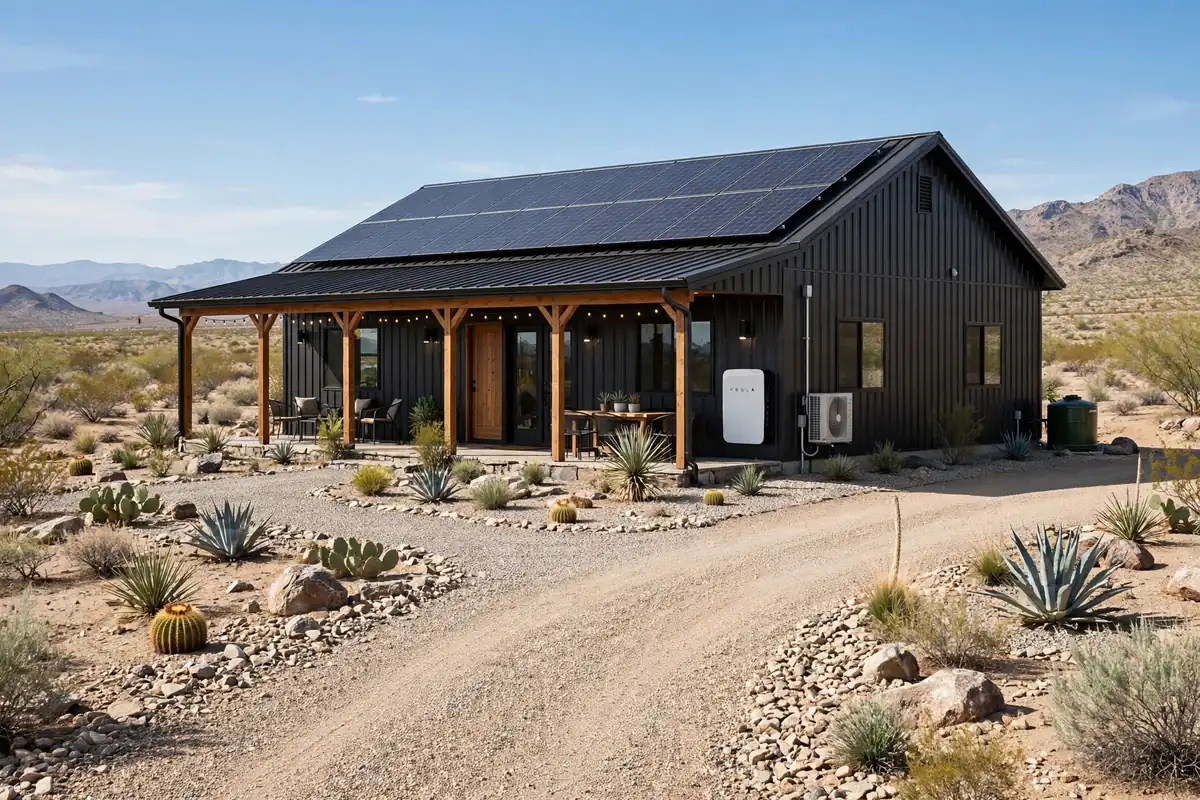
The Nevada barndominium cost per sq ft is only one part of the real budget, because the price of the metal building is just the start. Southern Nevada brings extreme heat and cooling demand. Northern Nevada brings snow, freezing temperatures and mountain conditions. Rural parcels add private wells, septic systems, long utility runs, grading, access roads and zoning questions. Multiplying a national average by your square footage will not give you a Nevada number.
| Planning factor | Why it matters in Nevada |
|---|---|
| Climate | Extreme heat in the south; colder, snowier conditions in the north and at elevation |
| Water | Rural parcels may rely on a domestic well and local water-right rules |
| Wastewater | No sewer usually means an approved onsite system |
| Codes | Local jurisdictions adopt and amend model codes |
| Energy code | 2024 IECC adopted statewide, with local amendments |
| Wildfire | Defensible space, access and ignition-resistant materials |
| Land development | Grading, driveway, power and remoteness can add a lot |
Nevada Barndominium Cost Per Sq Ft in 2026
One current 50-state estimate puts a Nevada turnkey barndominium at roughly $150–$225 per sq ft and an erected shell at $45–$80 per sq ft. Treat these as planning ranges, not bids. The source is a directory-based estimate, and it excludes land, wells, septic and most site work. Use the state-by-state cost guide to compare neighbours.
| Size | Turnkey range ($150–$225) |
|---|---|
| 1,500 sq ft | $225,000 – $337,500 |
| 2,000 sq ft | $300,000 – $450,000 |
| 2,400 sq ft | $360,000 – $540,000 |
| 2,500 sq ft | $375,000 – $562,500 |
| 3,000 sq ft | $450,000 – $675,000 |
Shell vs finished home
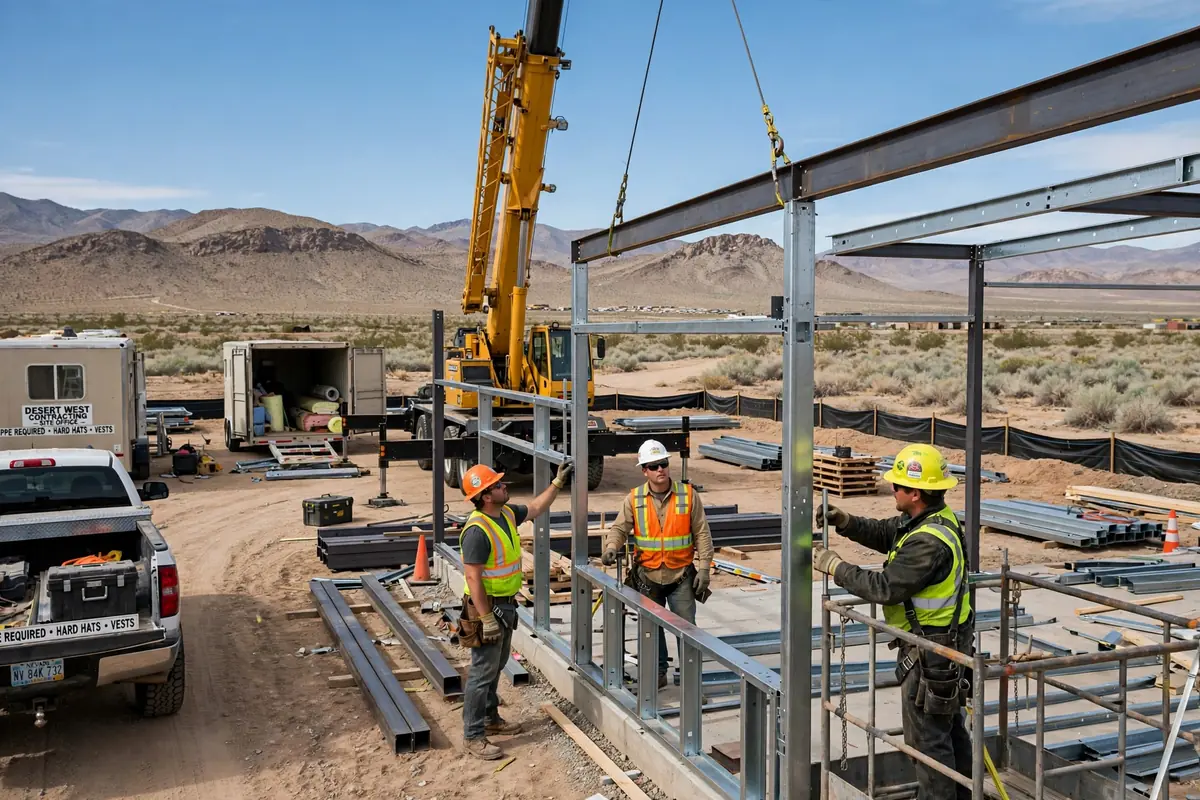
A 2,000 sq ft shell at $45–$80 is about $90,000–$160,000. It covers the frame, metal exterior and roof, depending on the contractor’s scope, but not the interior you need to live in. A $50 shell quote and a $200 finished-home quote are not competing offers for the same product.
Build your own estimate
Because well, septic and power vary so much by parcel, model them separately. Enter your own quotes below. Nothing here is a Nevada price, it just does the arithmetic.
Climate, heat and cooling
Nevada is unusually diverse. Las Vegas sits in a hot desert valley, and the National Weather Service notes that surrounding mountains shape local temperature, wind and runoff. Reno, Carson Valley, Elko and Ely face freezing weather and snow. No single design suits the whole state.
Roof, windows and HVAC
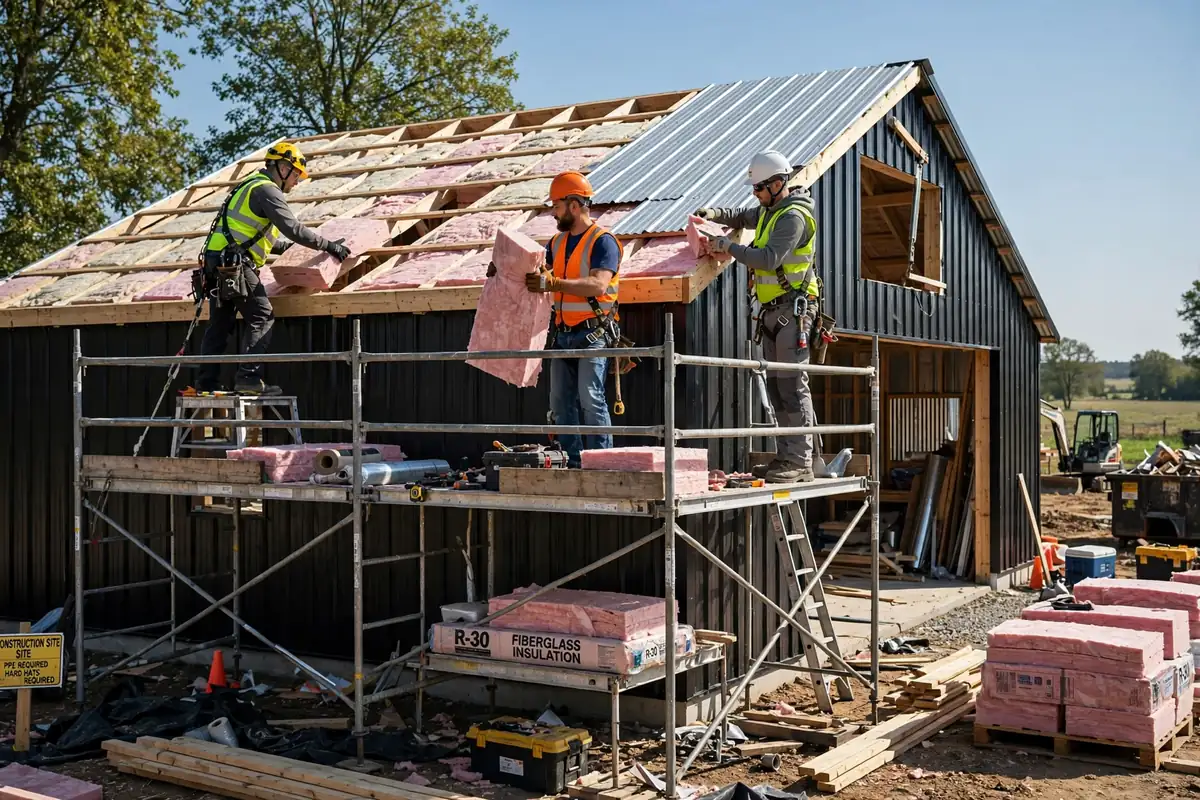
Roof: a large metal roof gains a lot of heat if insulation and air sealing are afterthoughts. Spray foam, rigid board, batts or hybrid assemblies can all work, so choose from energy calculations rather than price per square foot.
Windows: big west-facing glass creates a heavy afternoon cooling load. Shading, overhangs, glazing choice and orientation often beat simply buying a larger air conditioner.
HVAC: open great rooms, vaulted ceilings and shops behave differently from a conventional house. Size equipment from load calculations on the actual envelope, not total square footage.
Design moves for extreme heat
- Orient the building to limit west glass, within the limits of views and access.
- Add covered patios and deep overhangs.
- Use an unconditioned shop as a buffer, but coordinate it with the HVAC design rather than assuming it helps.
Codes, energy rules and permits
“Nevada building code” is not one code everywhere. Local governments adopt amendments, so your parcel’s jurisdiction decides what applies. A steel-framed home that looks agricultural still has to meet residential code.
- Energy: the Governor’s Office of Energy says the 2024 IECC is adopted statewide, and local governments may go further. It touches wall and roof insulation, air leakage, windows, HVAC, ducts, lighting and controls, so plan for it before ordering the shell.
- Southern Nevada: Clark County requires permit applications submitted from January 11, 2026 to meet its 2024 codes, including the 2024 IRC with Southern Nevada amendments (shared with Henderson, Las Vegas, North Las Vegas, Boulder City, Pahrump and Mesquite).
- Northern Nevada: Washoe County has also moved to the 2024 family: IRC, IBC, IECC, the Wildland-Urban Interface Code, plumbing and mechanical codes, plus Northern Nevada amendments.
Rural land: check before you buy
Rural does not mean unregulated. In Pahrump, for example, Nye County says development in the Pahrump Regional Planning District falls under Title 17 of the county code. A parcel marketed as “home-ready” still has to be checked for the specific dwelling you plan. Before closing, confirm:
- Zoning and whether a dwelling is permitted
- Minimum parcel size and setbacks
- Height limits, shop and accessory rules
- Livestock allowances, if relevant
- Legal and emergency access
- Real electrical availability, not “power nearby”
- Water source and septic feasibility
- Flood and drainage (dry desert can flash-flood)
- Wildfire requirements
- Soil, slope and foundation needs
- HOA or subdivision restrictions
- Full site cost, not just the land price
Wells and septic
Domestic wells
The Nevada Division of Water Resources says domestic wells serving a single-family dwelling are exempt from the normal water-right permit process, within statutory limits. Generally, though, you cannot drill a domestic well when a public water system can physically and legally serve the parcel. Investigate nearby wells, groundwater conditions and legal availability for your parcel. A well is a site cost, not a house-size cost: a 1,500 and a 3,000 sq ft home on the same remote parcel face similar drilling challenges, so model it separately.
Septic
The Nevada Division of Environmental Protection runs the onsite sewage disposal program, but residential approvals usually go through local health authorities or county building departments, which differ for Washoe, Clark and rural counties. Usable building area can be limited by lot shape, setbacks, existing wells, soils, drainfield needs and topography. Pahrump is a nitrogen-management area, so advanced treatment can apply. Do not borrow septic assumptions from another county.
Wildfire and site design
Desert does not mean no fire risk. The Nevada Division of Forestry and the State Fire Marshal stress defensible space, access and egress, and ignition-resistant construction. Plan for driveway width and emergency turnaround, vegetation near the building, roof and wall materials, vents, decks, propane tank placement and firewood storage.
Also budget for desert landscaping and weeds. Landowners have duties under Nevada’s noxious-weed rules (see the Department of Agriculture), and moving soil, gravel and equipment on disturbed land matters. Construction disturbing one acre or more generally needs coverage under the state’s Construction Stormwater General Permit, per NDEP.
Foundations
Sites range from flat desert to rocky ground, foothill slopes, fill areas and drainage channels. The foundation should follow the structural design, soil conditions and local requirements, not the simple metal-building image in advertising.
Hidden costs
| Expense | Why it matters |
|---|---|
| Land prep and driveway | Clearing, grading, compaction; long drives need lots of material |
| Electrical service | Remote parcels may need major utility extensions |
| Well, pumps, storage | Needed where public water is unavailable |
| Septic or sewer connection | Required wherever sewer is unavailable |
| Engineering and permits | Structural, civil, septic; fees vary by jurisdiction |
| Fire access and wildfire mitigation | Clearing and fire-resistant materials |
| HVAC | Desert cooling loads can be substantial |
| Solar, batteries, fencing, outbuildings | Optional, but they add up on large parcels |
Property tax is a separate calculation. The Department of Taxation explains that property is generally assessed at 35% of taxable value, and the bill depends on combined local rates, so construction cost does not directly equal your annual tax.
Cost and conditions by region
| Area | What to expect |
|---|---|
| Las Vegas / Clark County | Big market, intense heat, detailed 2024 amendments. Land with utilities is simpler; remote acreage adds site cost. |
| Pahrump | Larger acreage and rural residential. Check zoning, water and the nitrogen-area septic rules first. |
| Reno / Washoe County | Elevation and winter conditions; 2024 IRC, IECC and WUI code apply, so design for energy and wildfire. |
| Carson City / Carson Valley | High desert with colder winters; snow, heating, access and wildfire weigh more. |
| Elko / northeast | Cold winters, rural access, distance from suppliers and specialist contractors. |
| Mesquite | Warm desert, within the Southern Nevada code framework. |
| Fallon, Fernley, Ely | Agricultural acreage, growing rural-edge towns and high-elevation rural, respectively. Verify each parcel. |
Compared with Arizona, southern Nevada shares the same cooling, sun and water concerns, but Nevada also spans northern and high-elevation climates. A Las Vegas parcel can learn from Arizona desert design. A Reno or Elko parcel is closer to a mountain-state project. The same logic applies to Utah.
Is it cheaper than a traditional house?
Not automatically. A barndominium can save money through simple geometry, open spans and a combined living-and-shop footprint, but it still needs a foundation, insulation, electrical, plumbing, HVAC, finishes and code compliance. Compare finished with finished: same location, size, finish quality, site and shop or garage area. Try the Barndominium Cost Calculator.
Choosing a builder and cutting costs
Ask every builder for scope in writing: shell or finished home? Is the foundation, insulation, HVAC, electrical, plumbing, windows, interior, cabinetry, permits, engineering, utility connections, well, septic, grading and driveway included? Is the shop finished? What happens if rock turns up? What allowances and warranty apply? A lower headline price is not lower if major items are missing.
- Keep the footprint a simple rectangle with a simple roof.
- Spend on glass where views justify it; glass raises build and cooling costs.
- Condition only the shop space you really use.
- Evaluate land and site development together.
- Choose finishes deliberately; cabinets, counters and flooring swing budgets fast.
- Build the budget in two parts: building (shell, foundation, interior, systems) and site (preparation, driveway, utilities, water, septic, drainage, permits).
FAQ
How much is a 2,000 sq ft barndominium in Nevada?
About $300,000–$450,000 for the building at the planning range, before land, utilities, well, septic, driveway and other site costs.
Can I build one in Pahrump?
Possibly, depending on zoning, development standards, building rules, water and wastewater. Check the parcel with Nye County first.
Do Nevada barndominiums need to follow building code?
Yes. Requirements depend on the jurisdiction’s adopted codes and amendments.
Does Nevada require the 2024 IECC?
It is adopted statewide, with local amendments or stricter provisions possible. Confirm locally before design.
Does every rural property need septic?
No. A parcel with approved public sewer may not. Without sewer, an approved onsite system is typically required.
Is a barndominium good in hot weather?
It can be, with a good thermal envelope, roof insulation, air sealing, glazing, shading and properly sized HVAC.
Does wildfire matter?
It can, especially in rural and wildland-urban interface areas. Plan for defensible space, access and ignition-resistant construction.