
Every barndominium cost guide online gives you the same numbers. “$65–$160 per square foot.” “Average $230,000.” You’ve seen it a hundred times.
What they don’t tell you is why 60% of first-time barndominium builders blow their budget — and it has nothing to do with the steel kit price. This guide covers the real numbers, the real mistakes, and the decisions that separate a $220,000 finished home from a $420,000 one of the same size.
The short version: A finished 2,000 sq ft barndominium costs $120–$175 per square foot in most US markets in 2026. But the kit — the part everyone fixates on — is only 15–25% of that total. What happens after the steel goes up is where budgets are won or lost.
Table of Contents
The Number Nobody Tells You First
Before any cost table, understand this one fact:
The barndominium kit is usually only 20–25% of your total finished cost.
$40k Steel Kit Trap: A 40×60 barndominium kit costs $40,000–$80,000 for materials. That’s just the steel shell. According to a barndominium builder in Texas with 30+ years of experience, the turnkey cost for a move-in ready barndominium is $140–$150 per square foot. For a 2,000 sq ft home, budget $280,000–$300,000 total, excluding land. The kit is only 20% of your final cost.
The gap between “$50,000 kit” and “$280,000 finished home” is where most first-time builders get blindsided. Everything after the steel goes up — foundation, spray foam, plumbing, electrical, HVAC, drywall, flooring, cabinets — costs more than the shell itself.
Real Cost Ranges for 2026
| Finish Level | Cost per Sq Ft | What You Get |
|---|---|---|
| Shell only | $20–$50 | Steel frame, roof, siding. No slab, no insulation, no interior. |
| Basic finished | $80–$120 | Insulated shell, drywall, basic fixtures. |
| Mid-range finished | $120–$175 | Spray foam, upgraded windows, decent kitchen and bath. |
| Premium / custom | $200–$350+ | Polished concrete, custom cabinetry, complex rooflines. |
State-by-State Price Breakdown
| State | Finished Cost (per sq ft) | Key Notes |
|---|---|---|
| texas | $130–$210 | Most builder competition = lower labor. Rural central/east Texas hits $140–$160. |
| Oklahoma | $120–$170 | Most affordable state. Strong barndo culture, experienced contractors. |
| Tennessee | $125–$190 | Growing market. Nashville exurbs run $150–$200. |
| Florida | $150–$260 | Hurricane codes add 10–15%. Inland areas more affordable. |
| Missouri / Iowa | $110–$165 | Lowest labor rates. Winter insulation requirements add cost. |
| Colorado | $160–$280 | Snow load engineering required. Mountain towns add 20–30%. |
| California | $180–$350 | Highest labor and permit costs in the country. |
Full Line-Item Cost Breakdown (2,000 sq ft Example)
| Cost Category | Low Estimate ($) | High Estimate ($) | Notes |
|---|---|---|---|
| Land acquisition | 20,000 | 80,000+ | Vastly location-dependent |
| Site prep (clearing, grading) | 3,000 | 12,000 | Sloped or wooded land costs more |
| Utilities (well, septic, power) | 10,000 | 30,000 | Remote sites can hit $40,000+ |
| Concrete slab | 12,000 | 25,000 | Expansive clay soils require engineered slabs |
| Barndominium kit (shell) | 40,000 | 100,000 | Steel frame, roof, siding — only 20–25% of total |
| Assembly labor | 10,000 | 25,000 | DIY saves 30–50% here |
| Spray foam insulation (closed-cell) | 8,000 | 15,000 | Non-negotiable for metal buildings |
| Plumbing | 12,000 | 30,000 | Bathroom count drives this |
| Electrical | 10,000 | 25,000 | Open floor plans need more outlets than standard homes |
| HVAC | 8,000 | 18,000 | Must be sized for metal building — standard residential sizing is often wrong |
| Interior framing (wood studs) | 5,000 | 12,000 | For drywall attachment |
| Drywall & finishing | 8,000 | 20,000 | |
| Flooring | 5,000 | 20,000 | LVP vs polished concrete is a $15,000 decision |
| Kitchen cabinets & countertops | 8,000 | 30,000 | Biggest interior variable |
| Bathrooms | 3,000 | 12,000 | |
| Doors, trim, paint | 5,000 | 16,000 | |
| Permits & fees | 2,000 | 8,000 | County-specific — always call ahead |
| Contingency (15%) | 15,000 | 45,000 | Never skip this. |
| TOTAL TURNKEY | 184,000 | 523,000 |
Official resource: Check your local permit requirements at USA.gov Building Permits
The numbers above give you a strong starting point. For a more personalized estimate that factors in your specific location, size, and finish choices, use our free Barndominium Cost Calculator — it updates in real time as you adjust each variable.
The Hidden Costs That Kill Budgets
1. Site Work and Utilities
Everyone budgets for the kit. Nobody budgets for running power from the road ($5–$15 per linear foot), drilling a well ($30–$80 per foot), and installing a septic system ($3,500–$8,500). On a remote rural lot, these three items alone can add $15,000–$35,000 before a single steel beam goes up.
2. Foundation Surprises
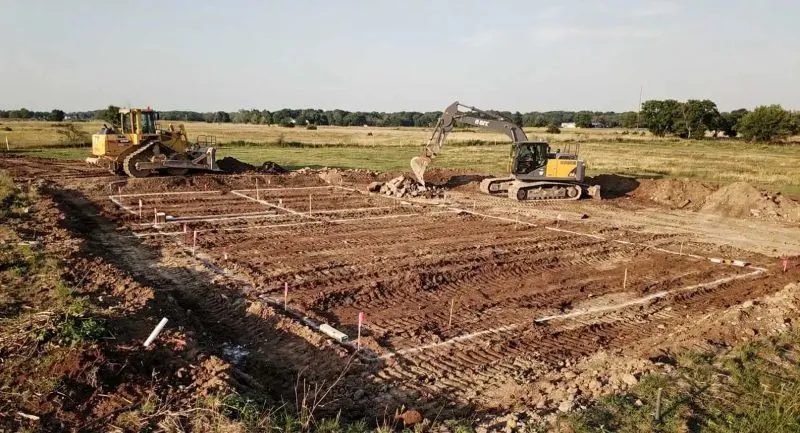
Expansive clay soils — common in Texas, Oklahoma, and Kansas — require an engineered slab rather than a standard pour. A soil test costs $200–$500. Skipping it and discovering the problem after your slab cracks can cost $10,000–$30,000 to fix.
3. Electrical Under-Planning
Open-plan barndominiums need far more outlets than standard residential calculations suggest. Builders report homeowners spending $5,000–$10,000 adding circuits after move-in. Add more circuits than you think you need during rough-in — it’s cheap then and expensive later.
The Social Media Problem
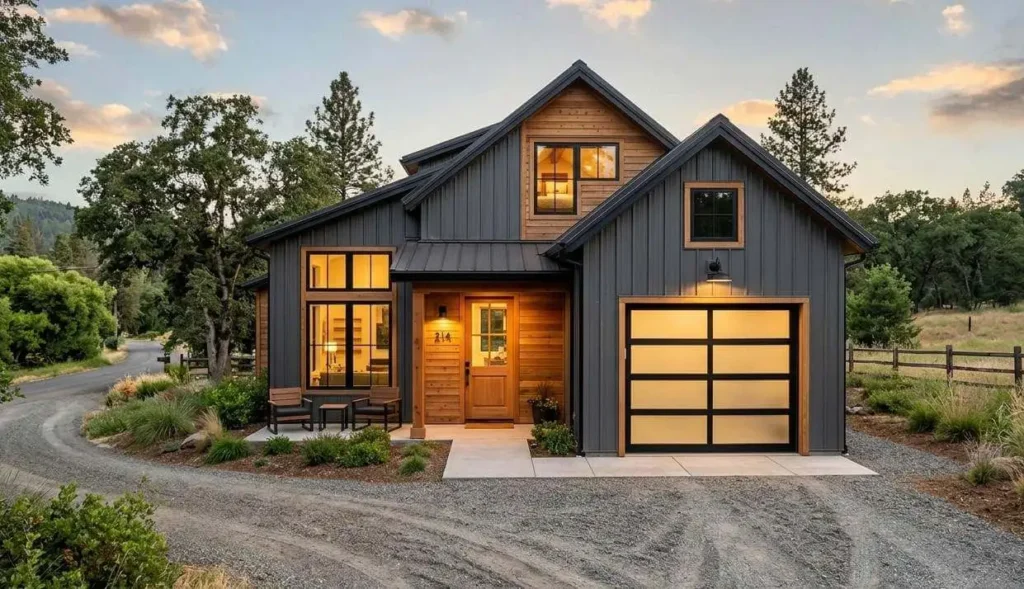
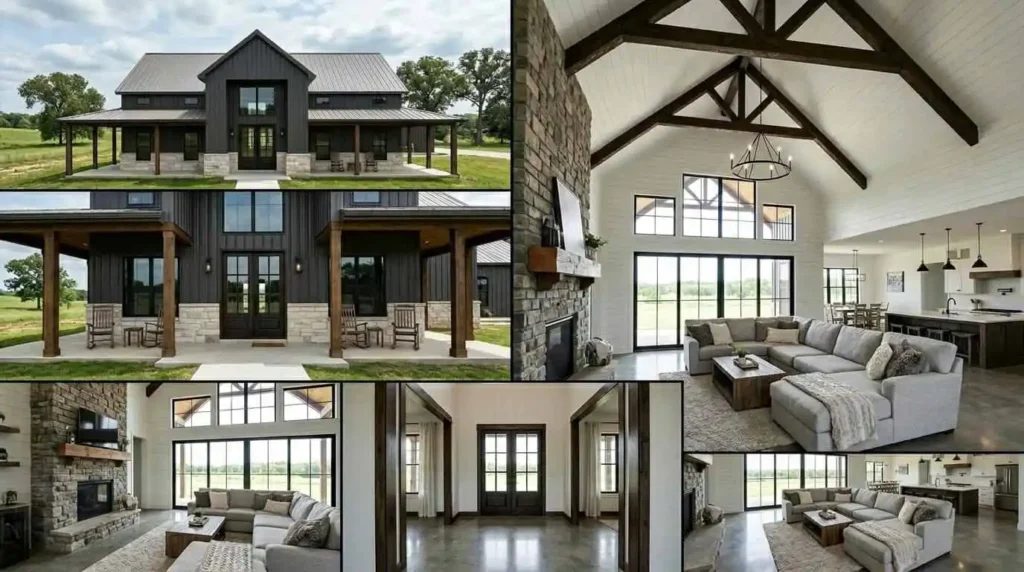
Social media barndominium images are almost always custom builds with dormers, complex roof lines, and oversized window packages. Those features add $20,000–$50,000 over a simple rectangular design. Keep the exterior simple. Put your budget into the interior where you actually live.
Why Insulation Is Non-Negotiable
Metal conducts heat and cold far faster than wood framing. Without proper insulation, your barndominium will be hot in summer, freezing in winter, and prone to condensation that causes rust and mold on your steel panels.
The solution is closed-cell spray foam insulation — not fiberglass batts, not rigid board alone.
| Feature | Closed-Cell Foam | Fiberglass Batts |
|---|---|---|
| R-value per inch | R-6 to R-7 | R-3 to R-4 |
| Vapor barrier | Yes | No |
| Stops condensation | Yes | No |
| Works in metal buildings | Yes | No |
Budget $8,000–$15,000 for closed-cell spray foam on a 2,000–2,400 sq ft build.
Never use fiberglass batts as your primary insulation in a metal barndominium. They leave air gaps, absorb moisture, promote rust, and sag over time — costing far more to fix than the money you saved upfront.
Free · Takes 60 seconds
Turn These Ranges Into a Real Number
These planning ranges are a solid starting point — the exact number for your build depends on your property, finish level, and builder. Answer a few quick questions and get matched with local, vetted barndominium builders who can give you an actual quote for your exact size, budget, and location — free, with zero obligation.
100% free — no credit card needed
How Much Barndominium Can $200,000 Build in 2026?
Here’s what a $200,000 budget (excluding land) actually gets you in different states in 2026. Costs assume you already own the lot.
Rural Oklahoma or Missouri
With 1,600–1,800 sq ft and a mid-range finish, including well and septic. Oklahoma and Missouri have some of the lowest labor rates and land costs in the US. They also have the most experienced barndominium contractors. Even after budgeting $15,000–$25,000 for a well and septic system, you can still afford a comfortable mid-range finish with decent kitchen cabinets, LVP flooring, and spray foam insulation. This is the best value-for-money region in the country for barndominiums.
Rural Texas (Central/East)
With 1,400–1,600 sq ft and a mid-range finish. Texas has the highest number of barndo builders, which keeps pricing competitive. Rural areas outside Dallas, Austin, and Houston are significantly cheaper than the suburbs. $200,000 gets you a solid mid-range finish at this size. Just remember that well and septic are usually extra. If your land doesn’t have utilities, add $20,000–$35,000 to your total budget.
Rural Tennessee
With 1,300–1,500 sq ft and a basic to mid-range finish. Tennessee is a fast-growing barndominium market. Prices around Nashville are climbing quickly, but rural counties are still affordable. With $200,000, you can comfortably build a basic finish barndominium. If you want mid-range finishes like quartz countertops and upgraded flooring, you’ll need to keep the footprint around 1,300 sq ft.
Florida Inland
With 1,100–1,300 sq ft and a basic to mid-range finish. Florida’s hurricane codes add 10–15% to construction costs compared to other southern states (FEMA Building Codes: Review hurricane and snow load requirements at FEMA Building Science). Coastal areas are 30% more expensive than inland towns like Ocala or Gainesville. For $200,000, expect a basic finish or a smaller mid-range finish. You’ll need impact-rated windows and reinforced roof tie-downs, which eat into the budget fast.
Colorado
Shell-only or very basic finish. Colorado requires engineering for snow load, especially in the mountains. Building in mountain towns adds 20–30% to your cost compared to the Front Range. $200,000 typically covers the steel shell, concrete slab, and very basic interior finishes. If you want a truly finished home with spray foam and drywall, budget $275,000+ for this size.
California
Shell-only. California has the highest labor costs and permit fees in the US. A $200,000 budget will only cover the steel shell and slab for a 1,500–1,800 sq ft building. If you want a move-in ready barndominium in California, plan for at least $350,000–$500,000 total, excluding land. Rural Central Valley is on the lower end, but still far above the national average.
Important: Always add a 15% contingency to any barndominium budget. On $200,000, that means keeping $30,000 in reserve for unexpected costs like soil issues, permit delays, or utility runs. The contingency is what separates a finished home from a half-built project.
Barndominium Cost: FAQ
Is a barndominium cheaper than a house in 2026?
Often yes, but the gap is narrower than it used to be. At basic to mid-range finish, barndominiums cost 10–30% less than comparable traditional stick-built homes. At premium finish levels the difference largely disappears — interior choices drive the final price, and those cost the same regardless of the exterior.
What is the cheapest state to build a barndominium?
Oklahoma, Missouri, and rural Iowa consistently have the lowest all-in costs — $110–$165 per square foot finished. Low land prices, experienced contractors, reasonable permit requirements, and lower labor rates all help. California and coastal Florida are the most expensive.
Can I get a mortgage for a barndominium?
Yes, but avoid national big banks. Local credit unions and portfolio lenders in barndo-friendly states are your best options. USDA, VA, and FHA loans all work if the property qualifies. Make sure your permit classifies the building as a single-family residence — not agricultural. Appraisals can be tricky if there are no comparable barndominium sales nearby. Work with a lender experienced in barndos.
USDA Loan Info: See if you qualify for a rural development loan at USDA Rural Development
How long does it take to build a barndominium?
The steel shell goes up in 1–3 weeks with an experienced barndominium crew. Interior finishing takes 3–6 months. Total timeline from foundation pour to move-in is typically 4–8 months — faster than the 9–12 months typical for stick-built homes.
Can You Live in a Barndominium While You Finish the Interior?
Yes, but only if your county issues a “certificate of occupancy” for a partially finished home. Many builders do the shell, insulation, electrical rough-in, and one bathroom first. That gets you legal occupancy. Then you finish bedrooms, flooring, and kitchen over 6–12 months as cash allows. This “phased build” approach is common in Oklahoma and Texas where code enforcement is flexible. Check with your local building department first — some counties require 100% completion before you move in.
Is a Barndominium Cheaper to Insure Than a House?
Sometimes yes, sometimes no. In Texas, Oklahoma, and Tennessee, insurers often classify barndominiums as “residential dwellings” and rates are 10–20% lower than stick-built homes because metal roofs handle hail better. In Florida and California, some carriers charge 15–30% more because they consider it “non-standard construction.” The key is documentation. Get your builder to list it as “steel-frame single-family residence” on the permit. Then call 3–4 local insurance agents and compare quotes before you pour the slab.
How Big of a Barndominium Can I Build Without a Permit?
This is a trap. Most counties require a permit for any structure over 200 sq ft. Some rural counties bump it to 400 sq ft for “ag buildings,” but you can’t legally live in an ag building. If you build a 1,200 sq ft “barn” without permits and then add plumbing, the county can force you to tear it down or pay 3x permit fees as a penalty. Always pull a residential permit. The $2,000–$8,000 fee is cheaper than rebuilding. Call your county planning office — it’s a 5-minute phone call that saves $50k.
Do Barndominiums Qualify for USDA Loans?
Yes, if two conditions are met:
1) The property is in a USDA-eligible rural area, and
2) Your building permit says “single-family residence” not “agricultural building.” USDA loans offer 0% down, which is huge for barndo buyers. The appraisal is the hard part. Your lender needs to find 3 comparable barndominium sales within 20 miles. In Texas and Oklahoma, that’s easy. In California, it’s nearly impossible. Talk to a local credit union that does portfolio loans — they keep USDA loans in-house and are way more flexible than big banks.
Check USDA Eligibility: Verify if your property is in a rural area using the USDA Eligibility Map
What’s the Resale Value of a Barndominium in 2026?
In markets where barndos are common — Texas, Oklahoma, Tennessee, Missouri — they now sell within 5% of comparable stick-built homes on a per-square-foot basis. Appraisers finally have enough “comps” to value them correctly. Data shows barndominiums appreciate 2–3% per year vs 4% for traditional homes, but you pay less upfront. In markets where they’re rare — Colorado mountains, California coast — resale takes longer and you might take a 10–15% hit unless your finishes are high-end. Rule of thumb: Build neutral. White walls, LVP floors, and shaker cabinets sell. Bright red siding and taxidermy walls don’t.
Cost data reflects 2026 US market conditions. Always obtain multiple contractor quotes before committing to a budget.